
Equity Gaps Persist In Higher Education Employment Structure
Why in the News ?
The proposed UGC Regulations 2026 on Equity in Higher Education have triggered debate after the Supreme Court of India stayed them, highlighting concerns that they focus on anti-discrimination mechanisms while ignoring deeper structural inequities in employment representation. Much like the challenges seen in ex post facto environmental clearances, these regulations address symptoms rather than systemic issues.
Equity Trends in Higher Education Institutions (HEIs):
● Representation Gap: SC, ST, and OBC groups remain underrepresented in faculty and staff positions compared to constitutional quotas, reflecting systemic barriers similar to those addressed in environmental jurisprudence.
● Hierarchy Inequality: Disparity is more pronounced at higher-level positions (professors, leadership roles), requiring proactive measures rather than post facto interventions.
● Admissions Success: Representation in UG, PG, and PhD admissions is largely aligned with reservation norms.
● Structural Issue: Employment gaps persist due to historical recruitment patterns and slow turnover, necessitating a precautionary principle approach to policy design.
● Key Insight: Equity challenge is deeper in employment than in admissions, demanding comprehensive regulatory frameworks akin to environmental clearance processes.
Data on Discrimination and Crime: Limitations
● Limited Complaint Data: Around 378 complaints reported across hundreds of institutions, indicating low recorded incidence.
● High Disposal Rate: About 90% of SC/ST-related complaints resolved, showing institutional response capacity.
● NCRB Data Issues: Classification of crimes against SC/ST lacks granular breakdown and comparability, similar to challenges in EIA notification compliance tracking.
● Underreporting Concern: Possibility of underreporting exists, but even adjusted estimates suggest complexity of causes.
● Social Proximity Factor: Crimes often occur within close social groups, not necessarily across communities.
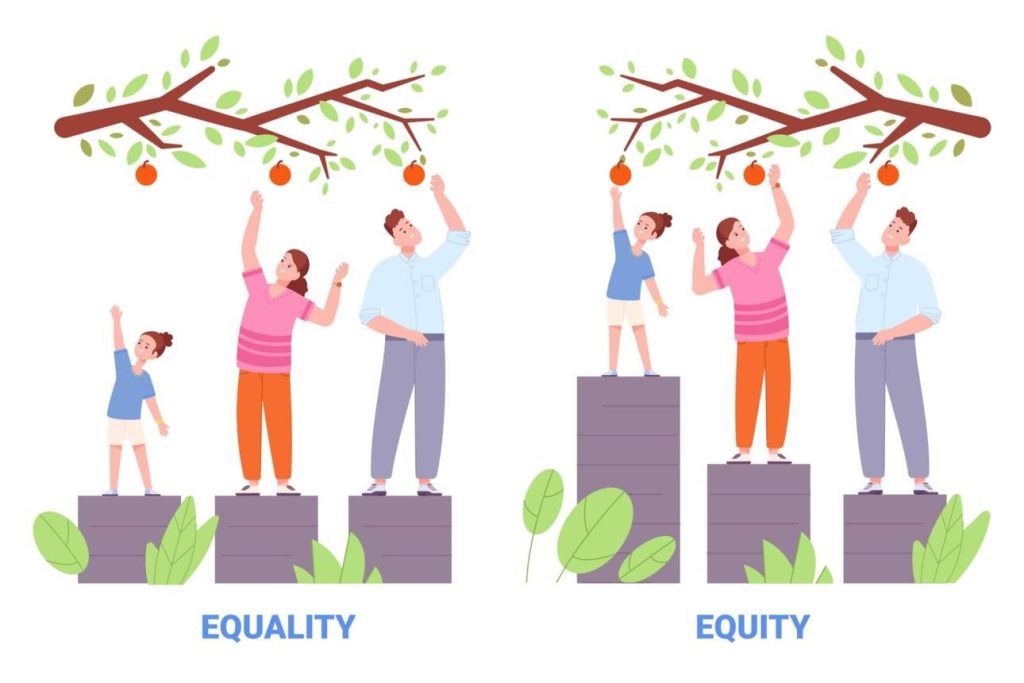
| About Equity vs Discrimination in Education : ● Equity vs Equality: ○ Equity: Targeted support for fair outcomes, applying the precautionary principle to prevent discrimination. ○ Equality: Uniform treatment irrespective of background. ● Constitutional Provisions: ○ Articles 15 & 16: Provide for affirmative action and reservations, embodying principles similar to the polluter pays principle in addressing historical injustices. ● UGC Role: Regulates standards and policies in higher education institutions, functioning as a regulatory body comparable to environmental clearances authorities .● Policy Gap: Current regulations emphasise complaint mechanisms rather than structural representation reforms, avoiding ex-post corrective approaches in favor of preventive measures. The Vanashakti judgment offers lessons on balancing regulatory compliance with substantive justice. ● Environmental Democracy Parallel: Just as environmental democracy ensures participatory decision-making, equity in education requires inclusive governance structures that prevent retrospective environmental clearances-type regulatory failures. |