
Delhi Pollution Pattern Shifts Towards Rising Ozone Threat
Why in the News ?
A new air-quality dashboard based on Central Pollution Control Board data has revealed a changing pollution pattern in Delhi-NCR, with declining NO₂ and CO levels but a worrying increase in ground-level ozone, highlighting emerging challenges in urban air pollution management and the need for comprehensive environmental impact assessment frameworks.
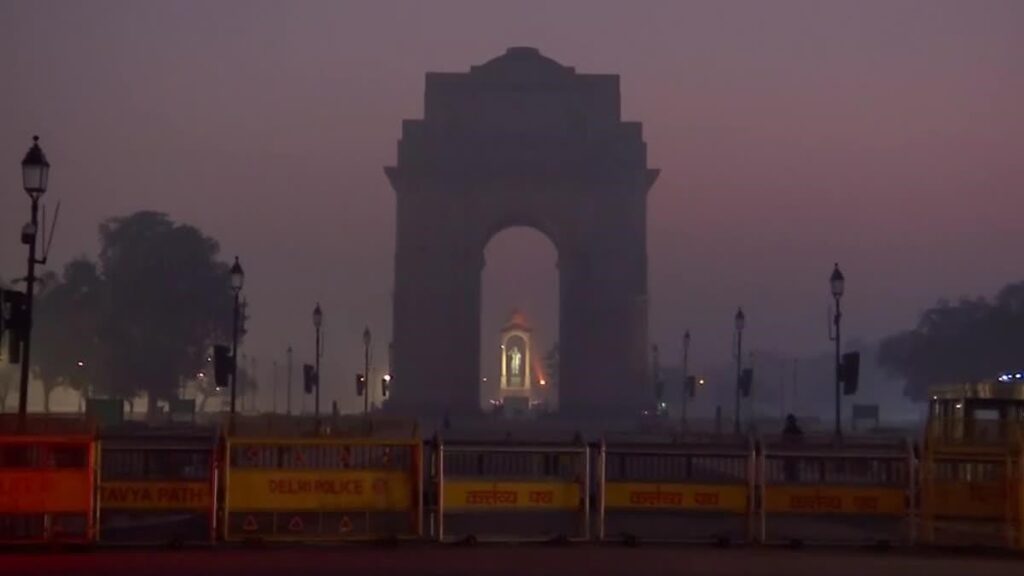
Changing Pollution Trends in Delhi-NCR:
- A dashboard launched by Delhi-based think tank Envirocatalysts analysed pollution trends using CPCB data since 2015, providing crucial insights for environmental clearances and regulatory decisions.
- PM2.5 levels in Delhi declined from around 175 µg/m³ (2015) to 96.4 µg/m³ (2025).
- PM10 levels also reduced from about 244 µg/m³ to 197 µg/m³ during the same period.
- Despite improvements, particulate pollution remains far above national and WHO safety limits, underscoring the gap between current conditions and a pollution free environment.
- Winter months continue to witness severe pollution due to stagnant air and crop residue burning, despite provisions under the Forest Conservation Act and related environmental regulations.
- Surrounding NCR cities like Ghaziabad, Gurgaon, Meerut, and Noida recorded worsening PM2.5 trends.
- Delhi’s air quality is closely linked to the regional pollution load of NCR cities, requiring coordinated environmental clearance mechanisms across state boundaries.
- Construction dust, road dust, and open land emissions remain major contributors to PM10 pollution, often operating without proper ex post facto compliance reviews.
Rising Ozone and Emerging Air Quality Concerns
- The report highlighted a significant increase in ground-level ozone pollution in Delhi, raising concerns about the effectiveness of current environmental democracy mechanisms.
- Annual average ozone concentration rose from 52 µg/m³ (2021) to 66 µg/m³ (2025).
- Ozone-dominant days increased sharply from 33 days (2024) to 76 days (2025).
- Ozone formation intensifies during summer due to strong sunlight and photochemical reactions, necessitating application of the precautionary principle in pollution control strategies.
- It forms when nitrogen oxides (NOx) and volatile organic compounds (VOCs) react under sunlight.
- Unlike particulate pollution, ozone peaks during March–June, especially in May.
- Long-term data show NO₂ and carbon monoxide levels declining, indicating reduced combustion emissions and better enforcement of the polluter pays principle.
- However, ozone poses a growing risk because it affects respiratory health, crops, and ecosystems.
| About Air Pollutants, AQI & Environmental Provisions: ● PM2.5: Fine particulate matter smaller than 2.5 microns; enters lungs and bloodstream. ● PM10: Coarse particles mainly from dust, construction, and road emissions. ● Nitrogen Dioxide (NO₂): Emitted from vehicles, industries, and thermal plants. ● Carbon Monoxide (CO): Produced through incomplete combustion of fuels. ● Ground-Level Ozone: Secondary pollutant formed by chemical reactions in sunlight. ● Air Quality Index (AQI): Measures overall air pollution and associated health impacts. ● The Central Pollution Control Board monitors air quality under the National Clean Air Programme (NCAP), working alongside EIA Notification frameworks for industrial compliance. ● NCAP (2019): Targets reduction in particulate pollution across Indian cities. ● Environmental Jurisprudence: Indian courts have developed robust principles including the Vanashakti judgment that strengthened environmental protections and addressed issues of retrospective environmental clearances. ● Health Impacts: Air pollution linked to asthma, cardiovascular diseases, lung damage, and premature deaths. ● Key Challenge: Shift from controlling only particulate matter to addressing secondary pollutants like ozone, while preventing ex-post regularization of non-compliant activities. |