
Rusty-Spotted Cat Recorded First Time In Chambal
Why in News ?
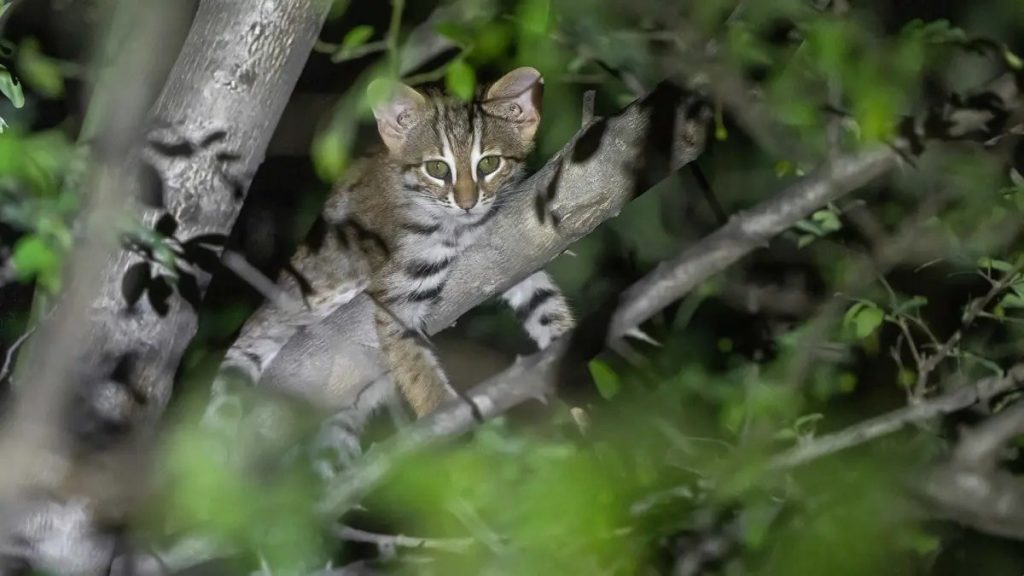
Researchers from the Wildlife Institute of India (WII) have documented the first confirmed record of the Rusty-spotted Cat in the National Chambal Sanctuary and southern Uttar Pradesh. The discovery highlights the need for focused conservation efforts, strengthened environmental clearances, and comprehensive wildlife monitoring in the Chambal-Yamuna landscape.
Historic Discovery in National Chambal Sanctuary:
● The Rusty-spotted Cat (Prionailurus rubiginosus), one of the world’s smallest wild cats, has been recorded for the first time in the National Chambal Sanctuary.
● The finding also marks the species’ first documented occurrence in southern Uttar Pradesh.
● The study, published in the Journal of Threatened Taxa on May 26, reported two roadkill incidents involving the species in Etawah district during 2025.
● The first carcass, a male cat, was found near the Yamuna River on March 14, while a female was discovered on April 24 near Chakarnagar.
● Both animals were located close to ravines, forest patches, and habitats connected with the Chambal River landscape, emphasizing the need for stringent environmental impact assessment before any developmental activities in these ecologically sensitive zones.
Conservation Significance and Ecological Importance
● Researchers stated that the discovery establishes a new distribution range for the species and strengthens knowledge of its habitat, underscoring the importance of environmental jurisprudence in wildlife protection.
● Wildlife experts highlighted that increasing use of camera traps and localized wildlife surveys is helping identify previously unknown populations, while also preventing the need for ex post facto conservation interventions.
● The repeated observations and reports of unconfirmed sightings suggest the possibility of a stable local population in the region, necessitating adherence to the precautionary principle in all development projects.
● The Chambal-Yamuna interfluve landscape contains extensive ravine networks and forested areas that can support small carnivores and other wildlife, requiring protection under the Forest Conservation Act and related environmental clearances framework.
● The roadkill incidents underline the need for targeted conservation measures, habitat protection aligned with EIA notification guidelines, mitigation of wildlife-vehicle collisions, and ensuring a pollution free environment through application of the polluter pays principle.
| About Rusty-Spotted Cat : ● The Rusty-spotted Cat is among the smallest wild cat species in the world and is native to the Indian subcontinent. ● Scientific Name: Prionailurus rubiginosus. ● Conservation Status: Near Threatened under the IUCN Red List. ● Habitat: Found in dry forests, grasslands, scrublands, agricultural landscapes, and rocky terrains, often near riverine zones that may fall under coastal regulation zone considerations. ● Important Protected Areas: Recorded in several wildlife habitats across India, Sri Lanka, and parts of Nepal. ● Threats include habitat fragmentation, road mortality, human disturbances, declining prey availability, and projects operating without proper environmental clearances or through retrospective environmental clearances that bypass environmental democracy principles. ● The discovery highlights the ecological importance of the National Chambal Sanctuary, which is also known for conserving species such as the Gharial, Gangetic Dolphin, and Indian Skimmer, with legal protections reinforced through landmark judgments like the Vanashakti judgment that strengthened environmental impact assessment procedures. |