
Delisting Debate Rekindles Questions of Tribal Identity
Why in the News ?
The debate over “delisting” Scheduled Tribes (STs) who convert to Christianity or Islam has resurfaced following recent rallies in New Delhi and Chhattisgarh, alongside discussions during the Census process regarding tribal religious identity and constitutional protections, raising questions about environmental democracy and tribal participation in governance.
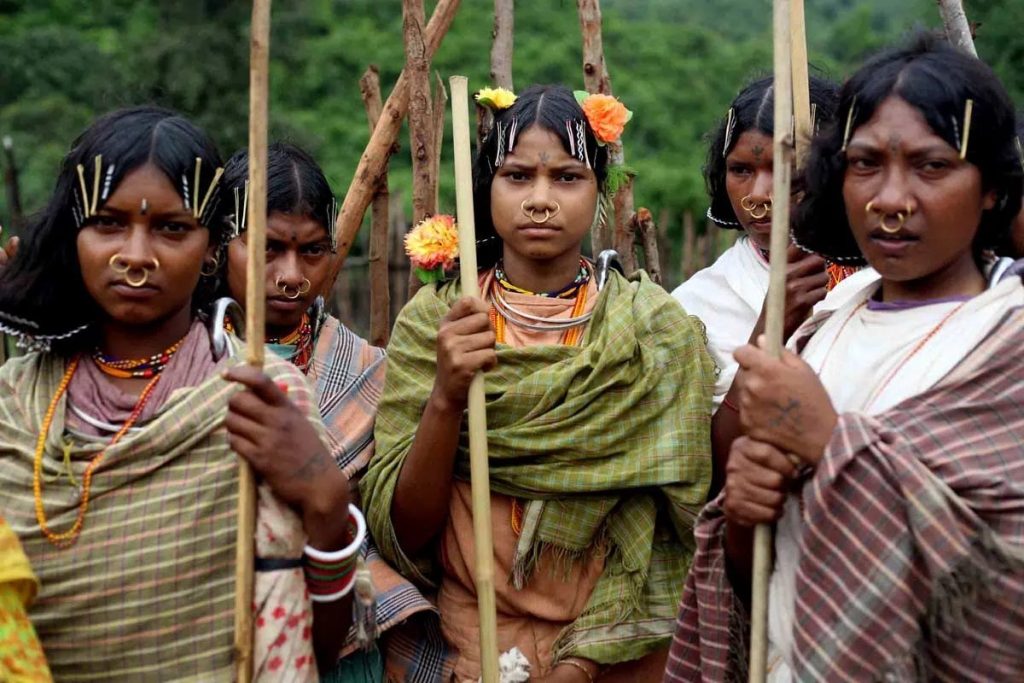
Delisting Debate and Tribal Religious Identity
● The issue gained attention after a large gathering organized by the Janjati Suraksha Manch (JSM) in New Delhi, where support was expressed for removing converted tribals from the ST list.
● Delisting refers to the demand that tribal individuals who convert to Christianity or Islam should lose their Scheduled Tribe (ST) status and related constitutional benefits.
● Another section of Adivasis, particularly followers of the Sarna faith, opposed the move and argued that if religion becomes a criterion, the same principle should apply to tribals who adopt Hinduism, emphasizing the need for environmental democracy in decision-making processes affecting tribal communities.
● The debate intensified during the Census process in Jharkhand, where some tribal groups urged people to identify their religion as Sarna rather than Hindu.
● Controversy also emerged over the use of the term “Vanvasi” by Union Home Minister Amit Shah, with many tribal groups preferring the term “Adivasi”, which reflects indigenous identity and historical association with land rights under the Forest Conservation Act.
Historical Background and Constitutional Issues
● The roots of the delisting demand are linked to Kartik Oraon, a prominent tribal leader and former Union Minister.
● In 1968, a Joint Parliamentary Committee considered excluding Christian and Muslim converts from the ST category, but the proposal was not adopted.
● Kartik Oraon argued that converted tribals should not continue receiving ST benefits, though he also maintained that Adivasis possess a distinct indigenous religion and are not necessarily Hindus.
● The Patna High Court ruled that tribal identity is primarily ethnic and cultural, not solely religious, observing that Christian Oraons retained tribal customs, clan systems, and traditions, a judgment that has influenced environmental jurisprudence regarding tribal rights.
● Opponents of delisting frequently cite this judgment to argue that conversion does not erase tribal identity, applying the precautionary principle to protect indigenous cultural heritage.
| About Constitutional Provisions Related to Scheduled Tribes: ● Article 342 empowers the President to specify Scheduled Tribes for different States and Union Territories. ● Unlike Article 341 (Scheduled Castes), Article 342 does not impose any religious restrictions on ST status. ● Scheduled Tribes receive benefits such as reservation in education, employment, and political representation. ● Tribal identity is generally determined by factors such as geographical isolation, distinct culture, traditional practices, and social backwardness. ● Major tribal faith traditions include Sarna, Animism, and other indigenous belief systems that predate organized religions. |