
Qdenga Vaccine Offers Hope Against Dengue Burden
Why in the News ?
India has cleared Qdenga (TAK-003), its first dengue vaccine, for individuals aged 4–60 years. This marks a major step in tackling dengue burden, though experts caution that it reduces disease severity, not transmission, requiring continued public health efforts.
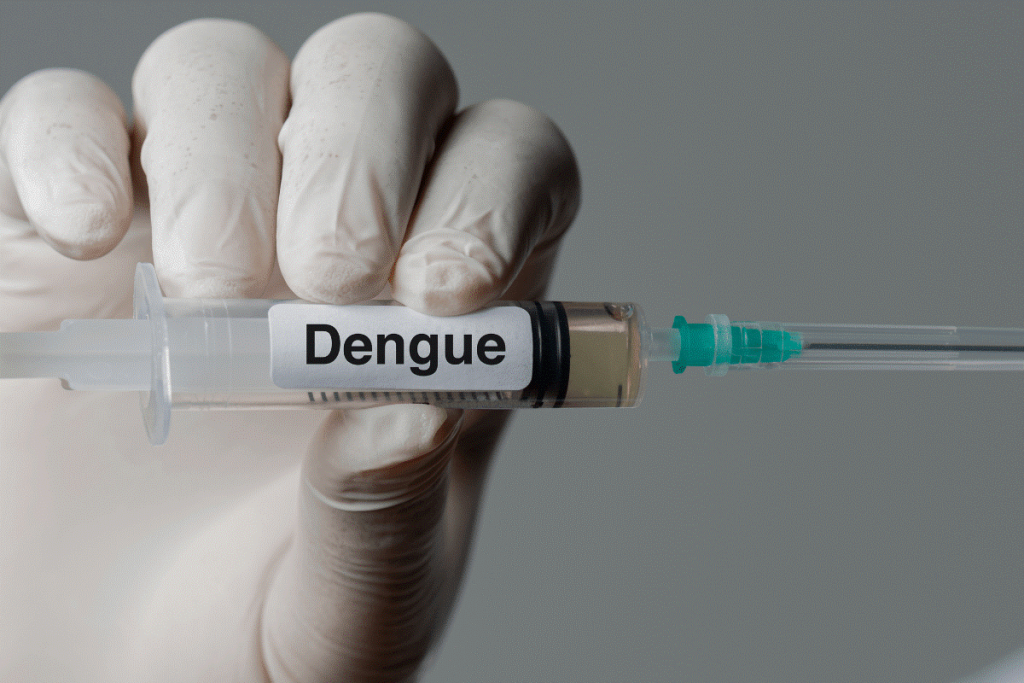
Significance and Benefits of Dengue Vaccine:
- Qdenga (TAK-003), developed by Takeda, is a tetravalent vaccine targeting all four dengue serotypes (DENV-1 to DENV-4).
- Approved after large global trials (28,000+ participants) and already used in 40+ countries.
- Provides strong protection against severe dengue and hospitalisation, which are key public health concerns.
- Does not require pre-vaccination screening, making it easier to deploy in large populations.
- Marks a shift from reactive vector control to a more preventive vaccination approach in India.
Limitations and Challenges
- Vaccine does not prevent infection, but only reduces disease severity—outbreaks may still continue.
- Uneven efficacy: strong against DENV-2, moderate for DENV-1, but weaker against DENV-3 and DENV-4.
- Rising prevalence of DENV-3 in India may reduce overall effectiveness at the population level.
- Requires two doses (3 months apart), affecting compliance.
- High cost (₹3,000–6,000 per dose) raises concerns about affordability and access, especially in rural areas.
| Key points: Dengue and Public Health in India ● Dengue is a vector-borne viral disease transmitted by Aedes mosquitoes.● Caused by four serotypes (DENV-1 to DENV-4); infection with one does not ensure immunity against others. ● Severe dengue risk increases due to Antibody-Dependent Enhancement (ADE) in secondary infections. ● India relies on vector control measures: eliminating breeding sites, insecticides, and awareness campaigns. ● All four serotypes co-circulate in India, with DENV-2 dominant and DENV-3 rising. ● Indigenous vaccine “DengiAll” (Panacea Biotec + ICMR) is under Phase III trials, and may be available by 2027. |