
Uttar Pradesh Revises Minimum Wages Amid Labour Concerns
Why in the News ?
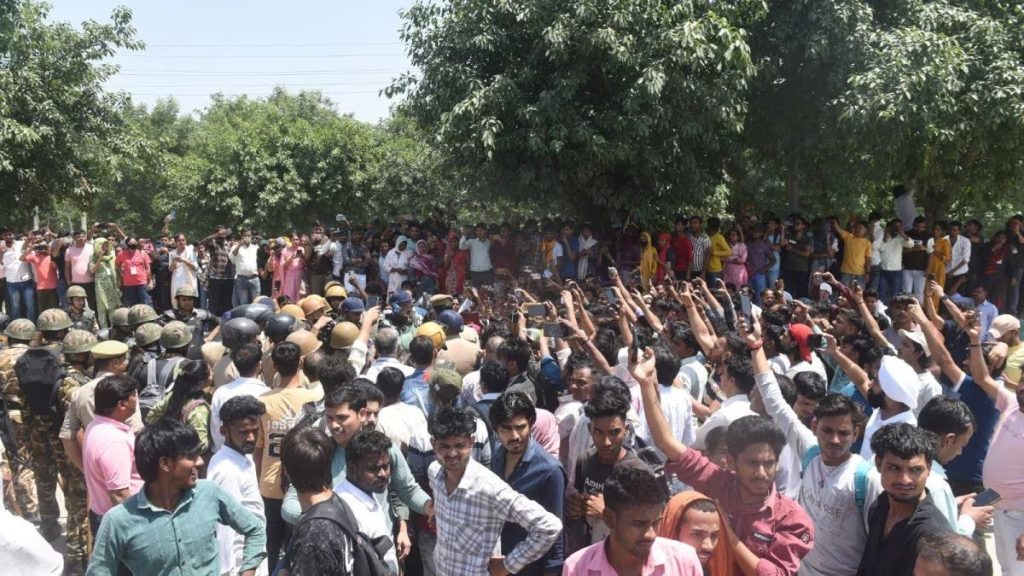
The Uttar Pradesh government revised minimum wages (April 2026) through an interim notification after labour unrest in industrial regions, aiming to address wage stagnation, inflation pressures, and inter-state wage disparities.
Key Features of Revised Wage Structure:
● The State revised wages under the Minimum Wages Act, 1948 with effect from April 1, 2026 (retrospective), implementing an ex post facto application to ensure workers receive benefits from the specified date.
● Introduced three regional categories based on industrial concentration and cost of living:
○ Category I: Gautam Buddha Nagar, Ghaziabad
○ Category II: Municipal corporation districts
○ Category III: Remaining districts
● Wages structured by skill levels: unskilled, semi-skilled, skilled workers.
● Example (Category I):
○ ₹13,690 (unskilled), ₹15,059 (semi-skilled), ₹16,868 (skilled)
● Introduces Basic Pay + Variable Dearness Allowance (VDA) to adjust wages with inflation trends.
● The revision is interim, based on recommendations of a High-Level Committee including stakeholders.
Legal-Economic Basis and Rationale
● Wage fixation guided by statutory provisions and economic indicators like the Consumer Price Index (CPI).
● VDA is linked to CPI, ensuring wages maintain real purchasing power amid inflation.
● Highlights delay in periodic revisions (missed cycles in 2019 and 2024), leading to wage gaps that necessitated this post facto correction.
● CPI rose significantly from 216 to ~425 (2025), necessitating urgent revision.
● Supported by Code on Wages, 2019, which allows regional differentiation in wages and provides for ex-post implementation mechanisms.
● Future proposal of National Floor Wage aims for uniform minimum standards across India.
| Key Laws, Concepts and Implications: Wages Act ● Minimum Wages Act, 1948: Ensures minimum livelihood protection for workers. ● Code on Wages, 2019: Consolidates labour laws; introduces floor wage and universal coverage. ● Variable Dearness Allowance (VDA): Adjusts wages based on inflation (CPI-linked). ● High-Level Committee: Ensures consultative policymaking with workers and employers. ● Implications: ○ Workers: Relief from inflation, but may still not meet living wage standards. ○ Employers: Higher labour costs, potential impact on profit margins. ○ State: Faces challenges in implementation, especially in the informal sector. |