
Bangladesh Approves Padma Barrage for Water Security
Why in the News ?
Bangladesh has approved the ambitious Padma Barrage Project on the Padma River (Ganga in Bangladesh) to address water scarcity and improve irrigation in its southwest region, while also reigniting debates over large-scale river engineering, environmental clearances, and ecological sustainability.
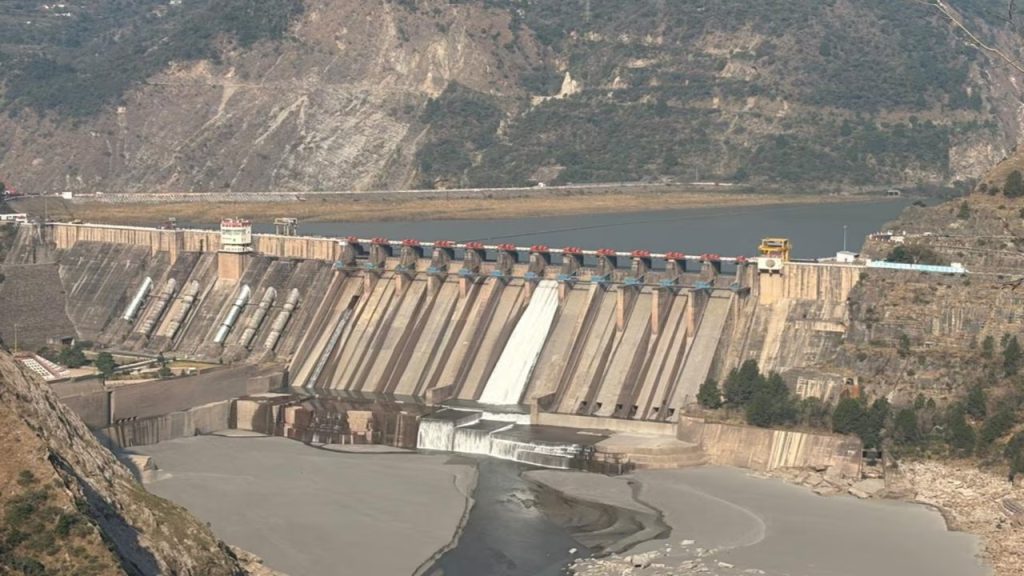
Padma Barrage: Objectives and Key Features
● Bangladesh plans to construct the Padma Barrage in Rajbari district to enhance water availability in drought-prone southwestern areas and ensure a pollution free environment for sustainable development.
● The project aims to counter the impact of reduced seasonal river flows, which Bangladesh links to the upstream Farakka Barrage in India, while obtaining necessary environmental clearance from relevant authorities.
● The proposed barrage will be approximately 2.1 km long and include 78 spillway gates, undersluices, navigation locks, fish passages, and embankments.
● It is expected to store around 2.9 billion cubic metres of water and generate 113 MW of hydropower.
● According to Bangladesh, the project could influence nearly 37% of the country’s land area and provide irrigation to about 2.88 million hectares of farmland, subject to comprehensive environmental impact assessment.
Benefits, Concerns and Regional Significance
● Supporters view the project as a crucial step towards water security, agricultural growth, and climate resilience.
● Improved irrigation facilities may boost crop productivity and support rural livelihoods in water-stressed regions.
● Critics argue that large barrages often fail to achieve intended outcomes and may disrupt natural river dynamics, raising concerns about ex post facto environmental clearances and retrospective environmental clearances.
● Environmental experts warn of potential issues such as waterlogging, changes in sediment transport, reduced fish populations, and ecological degradation, emphasizing the need for the precautionary principle in project implementation.
● The project has also sparked debate about South Asia’s increasing reliance on river barriers, contrasting with global trends where many countries are removing obsolete dams to restore river ecosystems, reflecting evolving environmental jurisprudence and environmental democracy principles.
● Legal experts stress the importance of applying the polluter pays principle to ensure accountability for any environmental damage caused by large-scale infrastructure projects.
| About Ganga-Padma System and Farakka Barrage : ● The Padma River is the name of the Ganga River after it enters Bangladesh. ● The Farakka Barrage, located in West Bengal, was commissioned in 1975 to divert water towards the Hooghly River and Kolkata Port. ● Water sharing between India and Bangladesh is governed by the Ganga Water Sharing Treaty (1996). ● Barrages are hydraulic structures designed to regulate river flow, support irrigation, and facilitate navigation, requiring compliance with the EIA notification and Forest Conservation Act. ● Large river engineering projects can influence sediment deposition, flood patterns, aquatic biodiversity, and regional hydrology, particularly in coastal regulation zone areas. ● In recent years, several European countries have removed old dams to improve river connectivity and ecological health, following principles established in the Vanashakti judgment and similar environmental jurisprudence. |