
Barren-Land Fallacy: Why Trees Aren’t Always Better
Why in the News ?
The concept of the barren-land fallacy highlights the ecological risks of treating every treeless landscape as degraded land. It stresses that grasslands, savannahs, wetlands, scrublands and deserts are naturally valuable ecosystems requiring context-specific restoration.
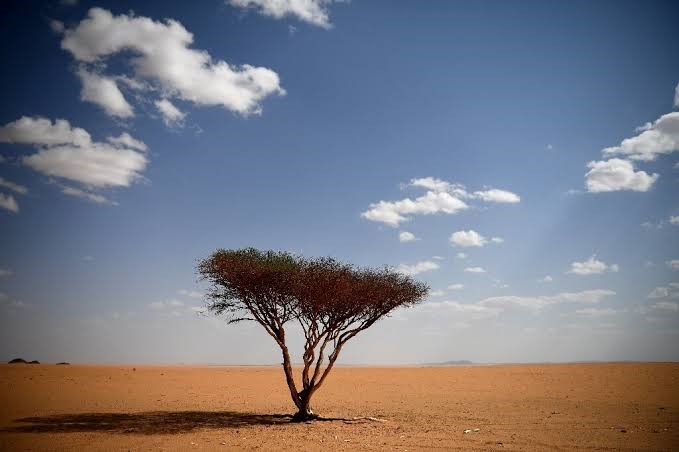
Understanding the Barren-Land Fallacy:
● The barren-land fallacy assumes that land without substantial tree cover is ecologically deficient and should eventually become a forest.
● This approach overlooks the fact that forests represent only one type of ecosystem.
● Naturally open ecosystems such as grasslands, savannahs, scrublands, wetlands and deserts can possess high ecological value without dense tree cover.
● Trees provide important ecosystem services, including:
○ Carbon sequestration and storage.
○ Temperature regulation and neighbourhood cooling.
○ Soil-erosion control.
○ Habitat and food for birds, insects and small animals.
● However, these benefits depend upon trees being planted within their appropriate natural ecosystem.
● Therefore, increasing tree cover cannot automatically be equated with ecological restoration.
Risks of Inappropriate Afforestation
● Tree-planting campaigns can become environmentally harmful when they introduce trees into ecosystems that are naturally treeless.
● In India, plantation programmes sometimes promote species that are poorly suited to local climatic and ecological conditions.
● Eucalyptus, for instance, can consume substantial quantities of water and may be inappropriate in water-stressed regions.
● Converting natural grasslands or drylands into forests can:
○ Alter water availability.
○ Disrupt native biodiversity.
○ Change soil and nutrient cycles.
○ Threaten species adapted to open habitats.
● The Sahel region of Mali demonstrates how semi-desert landscapes can be naturally adapted to limited rainfall rather than representing failed forests.
● Policies based on the assumption that drylands are merely deforested or overgrazed landscapes may therefore cause further ecological degradation.
About Ecosystem Restoration :
● Ecological restoration means recovering the structure, functioning and biodiversity of a degraded ecosystem according to its natural ecological characteristics.
● Restoration does not necessarily mean planting trees.
● The appropriate strategy should first identify the native ecosystem and its ecological requirements.
● Afforestation involves establishing forests where appropriate, while reforestation generally involves restoring forest cover where forests previously existed.
● Grasslands, savannahs and wetlands provide ecosystem services such as carbon storage, groundwater regulation, nutrient cycling and biodiversity conservation.
● Restoration should therefore follow a “right tree, right place” approach rather than simply maximising tree numbers.