
ARMED FORCES SEEK HIGHER RETENTION OF AGNIVEERS AFTER FOUR-YEAR TENURE
Why in the News?
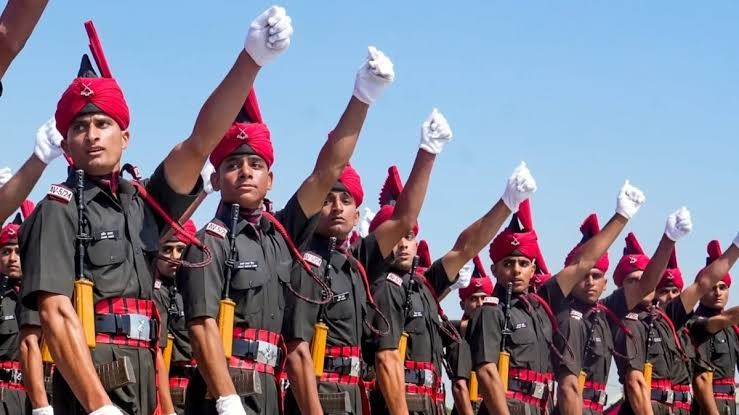
● Retention Proposal: The Indian Armed Forces are considering increasing the retention of Agniveers beyond the existing 25% after completion of their four-year service under the Agnipath Scheme.
● Operational Need: The proposal is driven by the requirement for a larger pool of experienced, technologically trained, and combat-ready personnel, drawing lessons from Operation Sindoor.
AGNIPATH SCHEME
● Launch: The Agnipath Scheme was launched in 2022 to recruit youth into the Army, Navy, and Air Force as Agniveers for a four-year tenure.
● Recruitment Model: Agniveers undergo military training and serve in operational roles, with up to 25% currently eligible for enrolment as regular personnel based on merit, performance, and organisational requirements.
● Objectives: The scheme aims to create a younger military profile, reduce the pension burden, improve operational flexibility, and build a pool of disciplined and skilled youth.
● Benefits: Agniveers receive a customised training programme, monthly salary, risk and hardship allowances, insurance cover, and a Seva Nidhi financial package on completion of service.
● Significance: The scheme supports military modernisation, promotes technology-oriented human resources, and enhances the long-term sustainability of defence manpower.
DEPARTMENT OF MILITARY AFFAIRS (DMA)
● Establishment: The Department of Military Affairs (DMA) was created in 2019 within the Ministry of Defence following the appointment of the Chief of Defence Staff (CDS).
● Head: It is headed by the Chief of Defence Staff (CDS), who serves as the Principal Military Adviser to the Government.
● Functions: DMA is responsible for promoting jointness among the Armed Forces, managing military staffing, training, procurement prioritisation, and facilitating defence reforms.
● Role in Agnipath: The department coordinates with the Army, Navy, and Air Force on matters related to Agniveer recruitment, retention, manpower planning, and policy implementation.
● Importance: DMA enhances tri-service integration, optimises resource utilisation, strengthens military preparedness, and advances theatre command reforms.
| CHIEF OF DEFENCE STAFF (CDS) ● Background: The post of Chief of Defence Staff (CDS) was created in 2019 based on the recommendations of the Kargil Review Committee and subsequent defence reform committees. ● Role: The CDS acts as the single-point military adviser to the Government on tri-service matters while promoting joint planning, procurement, logistics, and operational integration. ● Functions: The CDS heads the Department of Military Affairs (DMA) and facilitates theatre command reforms, capability development, and military modernisation .● Objective: The office seeks to improve jointness, interoperability, resource optimisation, and integrated warfighting capability across the three Services. ● UPSC Relevance: Important under Internal Security, Defence Reforms, Military Modernisation, National Security, and Civil-Military relations. |