
Vande Mataram: Patriotism, Dissent and Constitutional Freedom
Why in the News ?
The 2026 amendment extends criminal-law protection to Vande Mataram, prohibiting intentional obstruction or disruption of its singing. The debate has renewed questions about compulsory participation, religious conscience, freedom of expression, and the Supreme Court’s Bijoe Emmanuel precedent.
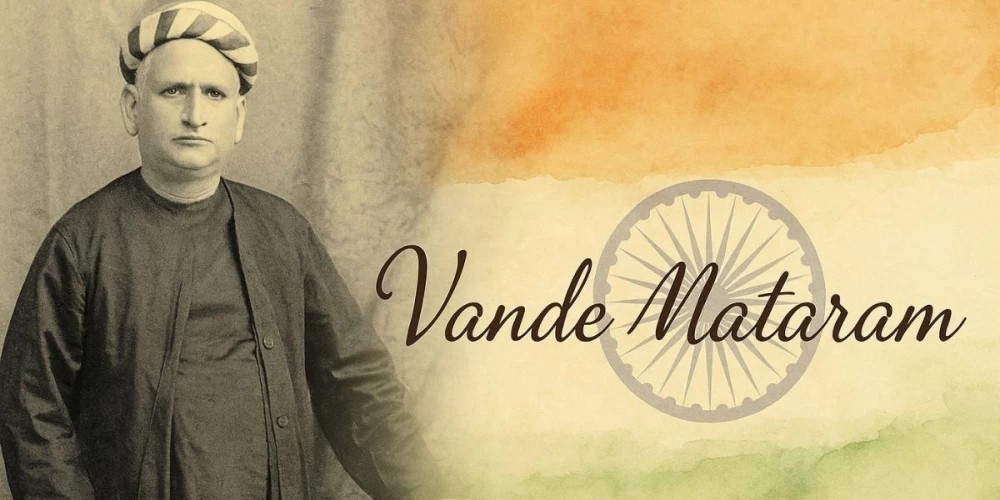
Vande Mataram: Historical and Constitutional Status:
● Bankim Chandra Chattopadhyay composed Vande Mataram in 1875, later incorporating it into Anandamath.
● The song became closely associated with the Swadeshi Movement (1905–08) and India’s freedom struggle.
● Its first two stanzas primarily describe the motherland through imagery of nature, fertility, rivers and greenery.
● The later stanzas contain explicit references to Hindu deities such as Durga, Lakshmi and Saraswati, creating concerns among some religious communities.
● In 1937, the Congress Working Committee decided that only the first two stanzas should generally be sung at official gatherings.
● On 24 January 1950, President Rajendra Prasad declared Jana Gana Mana the National Anthem, while according Vande Mataram equal honour because of its historic role in the freedom movement.
● However, Vande Mataram was not constitutionally made the National Anthem or a co-anthem.
2026 Amendment and the Right to Dissent
● The Prevention of Insults to National Honour (Amendment) Act, 2026 extends protection to both the National Anthem and National Song.
● It criminalises:
○ Intentionally preventing their singing.
○ Disturbing an assembly engaged in singing them.
● The law does not explicitly mandate that every citizen must sing Vande Mataram.
● It also does not prescribe that all six stanzas must be performed.
● Therefore, protecting a performance from deliberate disruption is legally different from compelling individual participation.
● Any application of the law must remain consistent with fundamental rights, particularly freedom of expression and freedom of conscience.
About Bijoe Emmanuel Judgment & Article 25:
● In Bijoe Emmanuel v. State of Kerala (1986), three Jehovah’s Witness students respectfully stood during the National Anthem but did not sing because of their religious conscience.
● The Supreme Court held that compelling them to sing violated Article 19(1)(a) and Article 25.
● The Court recognised that freedom of expression includes the freedom to remain silent.
● It also held that Fundamental Duties under Article 51A cannot override Fundamental Rights.
● Thus, a citizen who stands respectfully and remains silent without disrupting a rendition of Vande Mataram cannot automatically be treated as committing an offence.
● The issue highlights the constitutional balance between national symbols, patriotism, religious freedom and individual liberty.
● The broader principle is that patriotism cannot become a justification for overriding constitutionally protected conscience.