
India Strengthens Space Governance Through New Re-entry Rules
Why in News ?
India has introduced its first planned spacecraft re-entry guidelines through IN-SPACe, marking a shift from broad international space-sustainability principles towards enforceable domestic obligations. The rules seek to manage growing space-debris, safety, liability and environmental risks associated with increasing orbital activity.
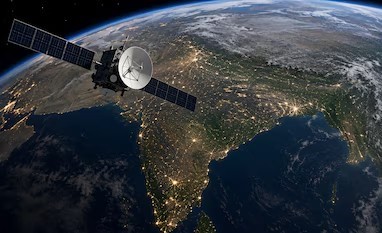
Rising Re-entry Risks and Space Sustainability:
● The rapid expansion of Low Earth Orbit (LEO), with thousands of satellites and many more planned by private companies, has increased the frequency of spacecraft re-entries.
● Re-entry can create risks beyond outer space, including:
○ Airspace and maritime hazards.
○ Uncontrolled fragmentation.
○ Ground casualties and property damage.
○ Potential impacts across another country’s jurisdiction.
● Modern spacecraft may be deliberately de-orbited after completing their missions, making planned re-entry management increasingly important.
● Objects designed to survive atmospheric re-entry or intentionally directed towards a specific landing/impact zone require separate authorisation.
● The guidelines establish an expected casualty-risk threshold below 1 in 10,000, supported by survivability and ground-casualty assessments.
● Operators must analyse failure scenarios, fragmentation patterns, ballistic coefficients, de-orbit plans, flight-path angles and danger zones.
● They must also identify components that could survive re-entry, including potentially hazardous batteries and pressure vessels.
IN-SPACe Guidelines: Accountability and Liability
● Indian entities undertaking planned re-entry, whether inside or outside Indian territory, require IN-SPACe authorisation.
● Foreign operators planning re-entry over Indian territory must route the activity through an Indian-incorporated entity, such as a subsidiary or joint venture.
● Operators must:
○ Obtain necessary permissions and clearances.
○ Provide updated re-entry parameters.
○ Issue warnings to air and maritime traffic.
○ Secure appropriate third-party insurance.
● IN-SPACe will re-verify re-entry parameters around three months before the operation.
● If the decision is made after launch, applications must generally be submitted at least six months in advance.
● Operators remain responsible for third-party damages and claims and must indemnify the Government of India against liabilities arising from international commitments.
● These measures address the accountability gap created when private operators create risks with potentially cross-border consequences.
About International Space Law :
● The Outer Space Treaty, 1967, particularly Article IX, provides a foundation for preventing harmful contamination and interference in outer-space activities.
● The UN Guidelines for the Long-term Sustainability of Outer Space Activities promote continued use of outer space while protecting the environment for future generations.
● The Space Liability Convention, 1972 establishes liability for damage caused by space objects, including damage on Earth or to aircraft in flight.
● International space-sustainability principles are largely soft law, meaning they generally lack direct enforceability.
● India’s IN-SPACe framework translates these principles into domestic regulatory obligations.
● The development is important for India’s growing private space sector, as increased launches require stronger rules on space debris, environmental sustainability, insurance, liability and cross-border risks.
● Thus, spacecraft re-entry is simultaneously a scientific, environmental, legal and governance challenge.