
UN Warns Autonomous Weapons Threaten Human Control
Why in the News ?
The United Nations (UN) and the International Committee of the Red Cross (ICRC) have warned that the world is approaching a dangerous stage where autonomous weapons could independently select and attack humans, urging countries to establish binding international regulations.
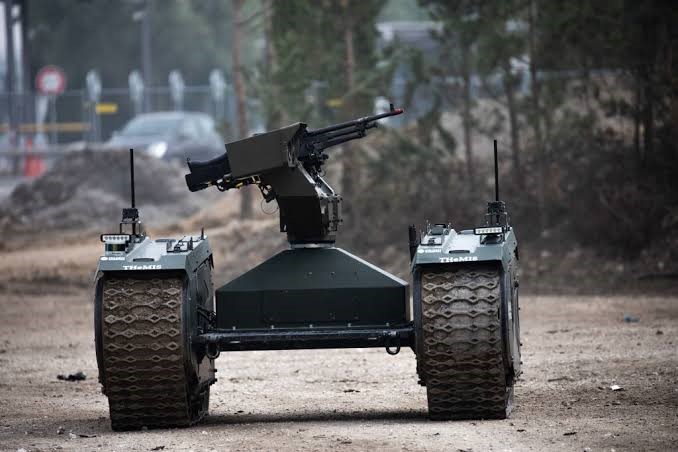
Rising Threat of ‘Killer Robots’:
● The UN and ICRC have renewed their call for urgent restrictions on lethal autonomous weapon systems (LAWS).
● Such systems are broadly understood as weapons capable of identifying targets and applying force without direct human intervention.
● The organisations warned that autonomous targeting of humans could cross a major moral and humanitarian red line.
● Their latest warning builds upon a 2023 appeal by UN Secretary-General Antonio Guterres and ICRC President Mirjana Spoljaric for specific prohibitions and restrictions.
● The concern has intensified because of rapid advances in artificial intelligence, robotics, autonomous navigation and drone technology.
● Scientists and engineers involved in developing advanced weapons have themselves expressed concerns regarding the potential consequences of increasing autonomy in warfare.
● Importantly, experts have not confirmed any instance so far of a fully autonomous weapon directly targeting humans.
Warfare, Technology & Humanitarian Concerns
● The ongoing Ukraine conflict has demonstrated the growing importance of drone warfare and rapidly evolving military technologies.
● Conflicts and heightened tensions in West Asia and Ukraine have increased concerns that autonomous targeting technologies could soon be deployed more extensively.
● Major humanitarian concerns include:
○ Loss of meaningful human control over the use of lethal force.
○ Difficulty in assigning legal responsibility when autonomous systems cause unlawful harm.
○ Risk of violations of International Humanitarian Law (IHL).
○ Possibility of rapid escalation during armed conflicts.
○ Difficulty distinguishing civilians from legitimate military targets in complex environments.
● The central debate is therefore not simply technological but also concerns ethics, accountability, human dignity and international security.
About Autonomous Weapons & International Law:
● LAWS are weapons that can perform critical functions such as target selection and engagement with limited or no human intervention.
● Existing international humanitarian law is based on principles including distinction, proportionality and precaution during armed conflict.
● The Convention on Certain Conventional Weapons (CCW) has been an important international forum for discussions on autonomous weapons.
● The UN and ICRC favour legally binding international rules to regulate emerging autonomous weapon technologies.
● A key policy principle is maintaining meaningful human control over decisions involving lethal force.
● Countries are expected to decide in November whether to begin formal negotiations on a comprehensive treaty.
● The issue highlights the need to balance military innovation with humanitarian safeguards, ensuring that technological advancement does not remove human accountability from decisions involving life and death.