
Gorkhaland Demand Enters New Phase of Dialogue
Why in the News ?
The Union Home Ministry has constituted a high-level committee to examine the long-standing Gorkha issue and prepare a framework for a “permanent political solution”. The move follows discussions among Gorkha leaders, the Centre and the West Bengal government.
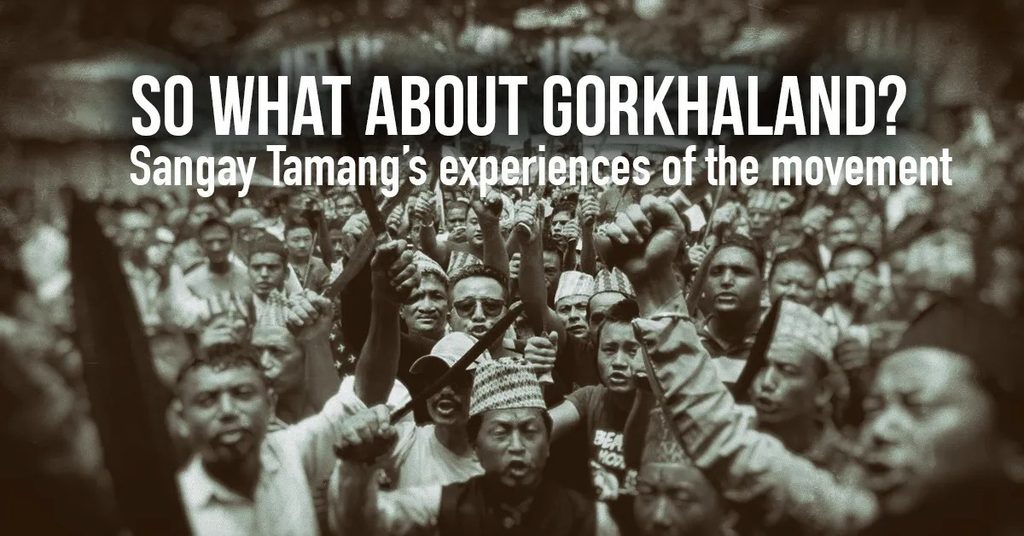
Historical Evolution of the Gorkhaland Demand:
● The demand for a separate administrative identity for the Gorkha population of Darjeeling dates back more than a century.
● In 1907, the Hillmen’s Association, led by Sonam Wangyal Laden La, petitioned the Minto-Morley Reforms Committee for separation of Darjeeling and Jalpaiguri from Bengal.
● The demand was subsequently raised before the Simon Commission (1929) and British officials seeking an alternative governance arrangement.
● In 1947, the undivided Communist Party of India submitted a memorandum proposing a separate “Gorkhasthan”.
● The modern political movement intensified in the 1980s under Subhash Ghising, founder of the Gorkha National Liberation Front (GNLF), who popularised the term Gorkhaland.
● Violent agitation eventually resulted in the establishment of the Darjeeling Gorkha Hill Council (DGHC) in 1988, providing limited autonomy.
● In 2007, Bimal Gurung formed the Gorkha Janmukti Morcha (GJM) and revived the statehood movement.
● The Gorkha Territorial Administration (GTA) was subsequently created in 2011, replacing the DGHC.
Identity, Unrest & Changing Hill Politics
● The movement is rooted in perceptions of cultural, linguistic and administrative distinctiveness between the Darjeeling hills and the plains of West Bengal.
● Large sections of the hill population speak Nepali and have historically raised concerns over racial profiling, political marginalisation and inadequate representation.
● The most intense agitation occurred in 2017, after Bengali was made mandatory in State-run schools in the region.
● The agitation lasted 104 days, resulting in deaths, violence, explosions and a prolonged shutdown of the hills.
● The unrest also reshaped hill politics, creating divisions within the Gorkha movement.
● Anit Thapa and Binay Tamang emerged as a faction aligned with the Trinamool Congress, while Bimal Gurung remained associated with the GJM.
● In the 2022 GTA elections, Thapa’s Bharatiya Gorkha Prajatantrik Morcha won 27 of 45 seats.
● However, the BJP has retained significant electoral influence, winning the Darjeeling Lok Sabha seat in 2019 and 2024 and all three hill Assembly seats in 2026.
About Constitutional & Administrative Issues:
● The new committee will examine the Gorkha issue within the framework of the Constitution, including governance and institutional arrangements.
● It will assess financial assistance and possible measures for improving development in the region.
● The panel will also examine a roadmap for granting Scheduled Tribe (ST) status to key Gorkha communities.
● The demand illustrates the broader Indian challenge of balancing regional aspirations, cultural identity, federalism and territorial integrity.
● Possible solutions include:
○ Strengthening autonomous governance.
○ Greater fiscal and administrative devolution.
○ Protection of linguistic and cultural identity.
○ Improved representation in decision-making.
○ Addressing legitimate developmental and socio-economic grievances.
● A negotiated solution could help reconcile Gorkha identity aspirations with the constitutional framework while maintaining West Bengal’s territorial integrity.