
THAILAND’S AMNESTY LAW SEEKS PEACE BUT SPARKS CONTROVERSY
Why in the News ?
Thailand’s Peaceful Society Promotion Act came into force on August 24, offering amnesty for several politically motivated offences committed between 2005 and 2025. However, exclusion of lese majeste offences, particularly involving young activists, has raised concerns over selective reconciliation.
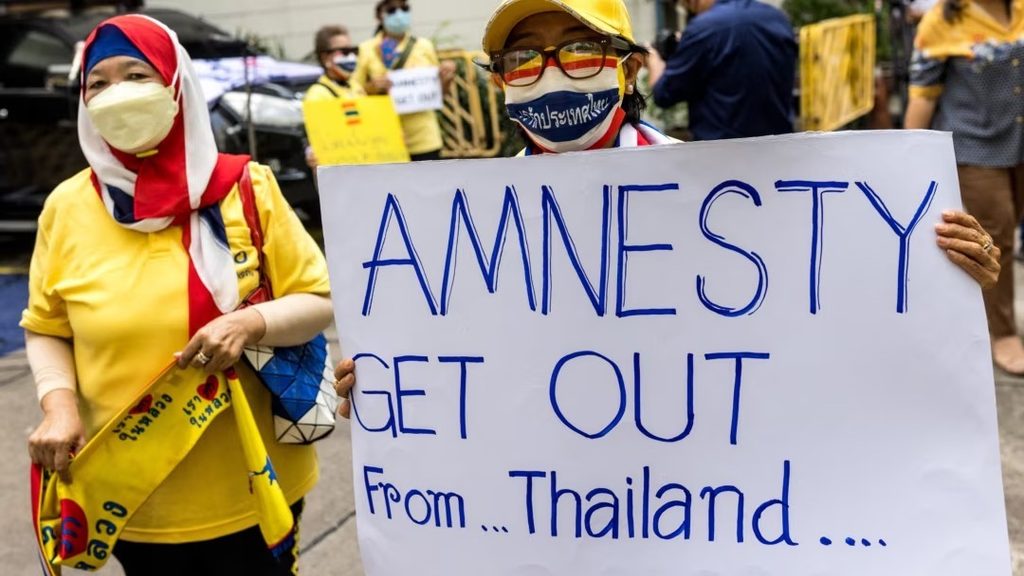
Amnesty Act: Provisions and Eligible Beneficiaries
● Broad coverage: The law provides amnesty for individuals convicted or prosecuted for politically motivated activities and expressions between January 1, 2005 and July 16, 2025.
● Eligible offences: More than 40 categories may qualify, including sedition, rebellion, cybercrimes and violations of emergency regulations.
● Key exclusions: Offences involving corruption, lese majeste, murder, serious physical injury and certain offences against private entities remain outside automatic amnesty.
● Institutional mechanism: A Peaceful Society Promotion Committee, headed by the Prime Minister or Deputy Prime Minister, will assess eligibility and include parliamentary representatives, human-rights experts and civil-society members.
● Legal relief: The committee can facilitate prisoner release, closure of investigations, termination of prosecutions, dismissal of pending cases and removal of eligible criminal records.
● Wide beneficiaries: Thousands prosecuted following political conflicts since the 2006 military coup could benefit, including supporters of Thaksin Shinawatra, pro-democracy activists and participants in rival political movements.
Shortcomings: Selective Reconciliation and Political Concerns
● Major exclusion: Keeping Article 112 outside the amnesty framework means many political prisoners, including young activists, remain excluded despite broader offences receiving relief.
● Youth vulnerability: A proposed provision granting relief to persons convicted under Article 112 for offences committed before adulthood was rejected, raising concerns about child-rights protections.
● Unequal reconciliation: Critics argue that the legislation promotes selective reconciliation, benefiting competing political factions while excluding a significant section of the pro-democracy movement.
● Legal inconsistency: Preventing existing rehabilitation and judicial-diversion mechanisms for minors from applying to Article 112 cases has attracted criticism from human-rights organisations.
● Election concerns: Inclusion of certain election-fraud offences has generated apprehension that the law could erase wrongdoing unrelated to genuine politically motivated expression.
● Political strategy: The sweeping provisions may help the government consolidate support across Thailand’s divided political spectrum, but unresolved questions surrounding Article 112 could limit the law’s ability to achieve genuine national reconciliation.
About Thailand’s Political Crisis and Article 112 :
● Political instability: Thailand has experienced repeated military coups, mass protests, constitutional changes and clashes between royalist and populist forces, making political reconciliation a recurring challenge.
● Thaksin factor: Former Prime Minister Thaksin Shinawatra became a major political figure through populist policies, while his opponents accused his governments of authoritarianism and corruption.
● Yellow Shirts: The People’s Alliance for Democracy, commonly associated with the Yellow Shirt movement, opposed Thaksin and played a major role in protests preceding the 2006 coup.
● Article 112: Thailand’s lese majeste provision criminalises defamation, insult or threats against the King, Queen, heir-apparent or regent, making it a highly contentious issue in democratic debates.
● Human-rights concerns: Critics argue that Article 112 has been used to suppress political dissent, with concerns particularly acute where juveniles and pro-democracy activists face prosecution.