
Parkinson’s Disease Awareness Highlights Symptoms and Treatment Challenges
Why in the News ?
April is observed as Parkinson’s Disease Awareness Month, drawing attention to the need for early diagnosis, better understanding of symptoms, and the importance of support systems for patients and caregivers to improve quality of life.
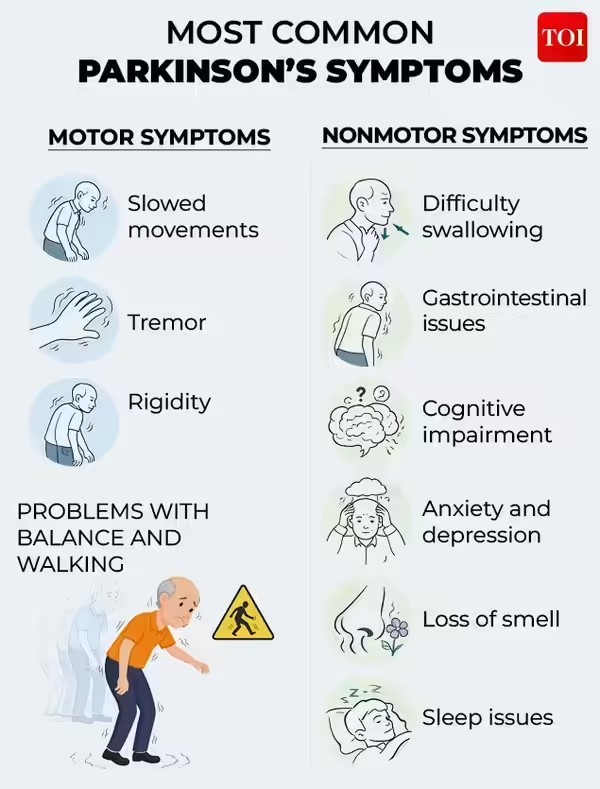
Symptoms and Diagnosis Challenges of Parkinson’s Disease:
● Parkinson’s disease is a progressive neurodegenerative disorder affecting movement and coordination.
● Commonly affects individuals in the fifth or sixth decade of life.
● Three cardinal motor symptoms:
○ Tremors (shaking of hands)
○ Bradykinesia (slowness of movement)
○ Rigidity (muscle stiffness)
● Early signs are often misinterpreted as fatigue or general weakness, leading to delayed diagnosis.
● Non-motor symptoms may appear years before motor symptoms, including:
○ Constipation
○ Sleep disorders (acting out dreams, REM sleep behaviour disorder)
● Patients often ignore early non-motor symptoms, delaying consultation with neurologists.
● Delayed diagnosis reduces the effectiveness of early intervention strategies.
Treatment Options and Role of Support Systems
● Currently, there is no complete cure, but treatment helps manage symptoms and slow progression.
● Medications are tailored to symptoms like tremors, rigidity, and emotional disturbances.
● Surgical Treatments:
○ Deep Brain Stimulation (DBS): Uses electrical impulses to regulate abnormal brain activity.
○ Adaptive DBS: Adjusts stimulation in real-time based on patient’s brain signals.
○ MR-guided Focused Ultrasound: Effective for tremor-dominant cases, available in select centres.
● Goal of Treatment: Ensure functional independence and improved quality of life.
● Support Groups:
○ Provide emotional, psychological, and physical support.
○ Offer therapies like physiotherapy, speech therapy, counselling, and occupational therapy.
● Caregiver Support: Helps reduce burnout and improves patient care.
● ● Awareness about support groups remains limited, requiring policy attention.
| Key Points: Parkinson’s Disease ● Parkinson’s Disease: A disorder caused by degeneration of dopamine-producing neurons in the brain. ● Dopamine: Neurotransmitter responsible for movement control and coordination. ● Neurodegenerative Disorders: Diseases involving progressive loss of neuron function (e.g., Alzheimer’s, Parkinson’s). ● Deep Brain Stimulation (DBS): Neurosurgical procedure using implanted electrodes. ● REM Sleep Behaviour Disorder: Early indicator of Parkinson’s, involving abnormal movements during sleep. ● Key Concepts:○ Early Diagnosis: Crucial for slowing disease progression○ Quality of Life Approach: Focus on independence and daily functioning ● Public Health Aspect:○ Need for awareness campaigns○ Integration of neurological care and rehabilitation services ● Important Insight: Parkinson’s highlights the growing burden of non-communicable diseases (NCDs) in ageing populations. |