
India’s Bat Conservation Faces Threats and Research Gaps
Why in the News ?
The first-ever national report, “State of India’s Bats (2024–25)”, highlights threats to bat species due to urbanisation and climate change, while exposing major data gaps and research neglect, raising concerns about biodiversity conservation and zoonotic disease risks.
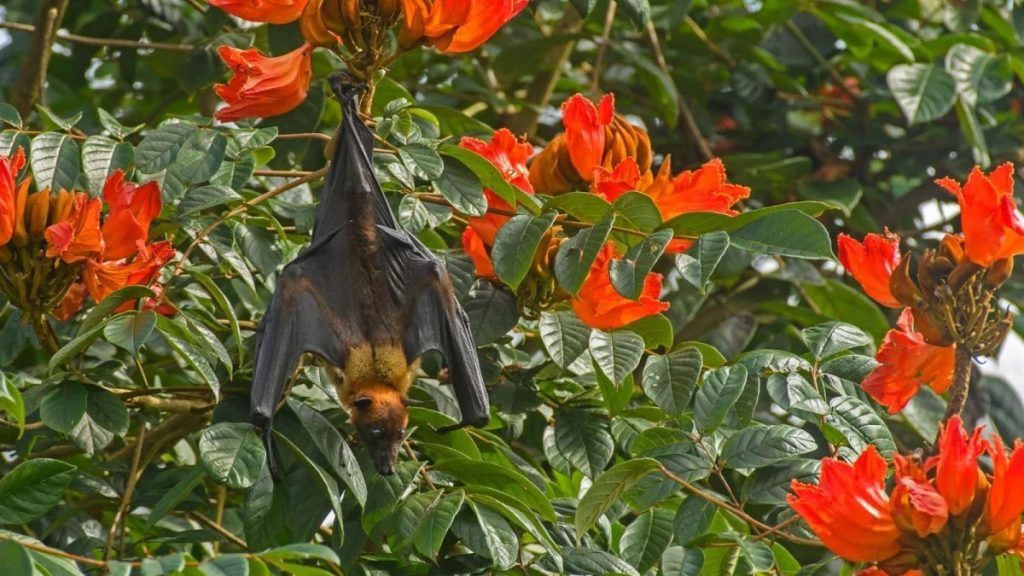
Status of Bat Species and Emerging Threats:
● India hosts around 135 bat species, reflecting significant biodiversity richness.
● 16 species are endemic, found only in India, making conservation crucial.
● At least 7 species are classified as threatened by the IUCN.
● Around 35 species lack sufficient data, indicating serious research gaps.
● Major threats include urbanisation, deforestation, land-use changes, and climate change, often proceeding without adequate environmental impact assessment.
● Activities like mining and hunting, especially in regions like Meghalaya, endanger species such as the Khasian Leaf-nosed bat, with concerns over ex post facto environmental clearances granted to projects affecting critical habitats.
● Negative perception post-COVID-19 has increased stigma, wrongly portraying bats as disease carriers.
● Emerging risks from renewable energy infrastructure (like wind turbines) also affect bat habitats, requiring proper EIA notification compliance.
Ecological Importance and Conservation Challenges
● Bats play a crucial role in pollination, supporting plant reproduction.
● They aid in seed dispersal, maintaining forest ecosystems.
● Act as natural pest controllers, benefiting agriculture and reducing pesticide use.
● Bat droppings (guano) enrich soil, improving nutrient cycles.
● Despite ecological importance, bats remain neglected in conservation policies, with weak application of the precautionary principle in habitat protection.
● Research barriers, including bureaucratic hurdles in obtaining environmental clearances for field studies, hinder scientific research.
● Most research is concentrated in regions like the Western Ghats, leaving other areas underexplored.
● Lack of awareness about ecosystem services provided by bats worsens conservation neglect, undermining environmental democracy.
● Poor coordination among agencies beyond the Forest Department limits effective action, despite frameworks like the Forest Conservation Act.
| Key Conservation provisions: ● IUCN Red List: Classifies species based on extinction risk (e.g., threatened, endangered). ● Endemic Species: Species restricted to a specific geographic area. ● Zoonotic Diseases: Diseases transmitted from animals to humans. ● Biodiversity Hotspots: Regions with high species diversity under threat (e.g., Western Ghats). ● Environmental Jurisprudence Principles: ○ Polluter Pays Principle: Those causing environmental damage must bear costs○ Precautionary Principle: Preventive action against environmental harm● Key Legal Frameworks: ○ Forest Conservation Act: Protects forest habitats○ Coastal Regulation Zone: Safeguards coastal ecosystems○ EIA Notification: Mandates environmental impact assessment for projects ● Key Organisations:○ Nature Conservation Foundation (NCF)○ Bat Conservation International ● Important Concepts:○ Data Deficiency: Lack of sufficient scientific data for assessment.○ Ecosystem Services: Benefits humans derive from ecosystems (pollination, pest control).○ Ex Post Facto Clearances: Retrospective environmental clearances granted after project commencement.○ Vanashakti Judgment: Landmark ruling on environmental clearances and conservation. ● Policy Need: Strengthen wildlife conservation frameworks, promote scientific research, and ensure pollution free environment for bat habitats through robust environmental jurisprudence. ● Recommendations from Report:○ Increase habitat and ecological studies○ Enhance pathogen surveillance, especially in Northeast India and Western Ghats○ Study impacts of environmental pollution on bats○ Prevent post facto environmental clearances for projects affecting bat habitats |