
Ancient Stepped Reservoir Discovery Highlights Elephanta Island Heritage
Why in the News ?
A 1,500-year-old stepped reservoir has been discovered by the Archaeological Survey of India (ASI) on Elephanta Island near Mumbai. The excavation reveals insights into ancient water management, trade networks, and cultural life, highlighting India’s rich maritime and archaeological heritage.
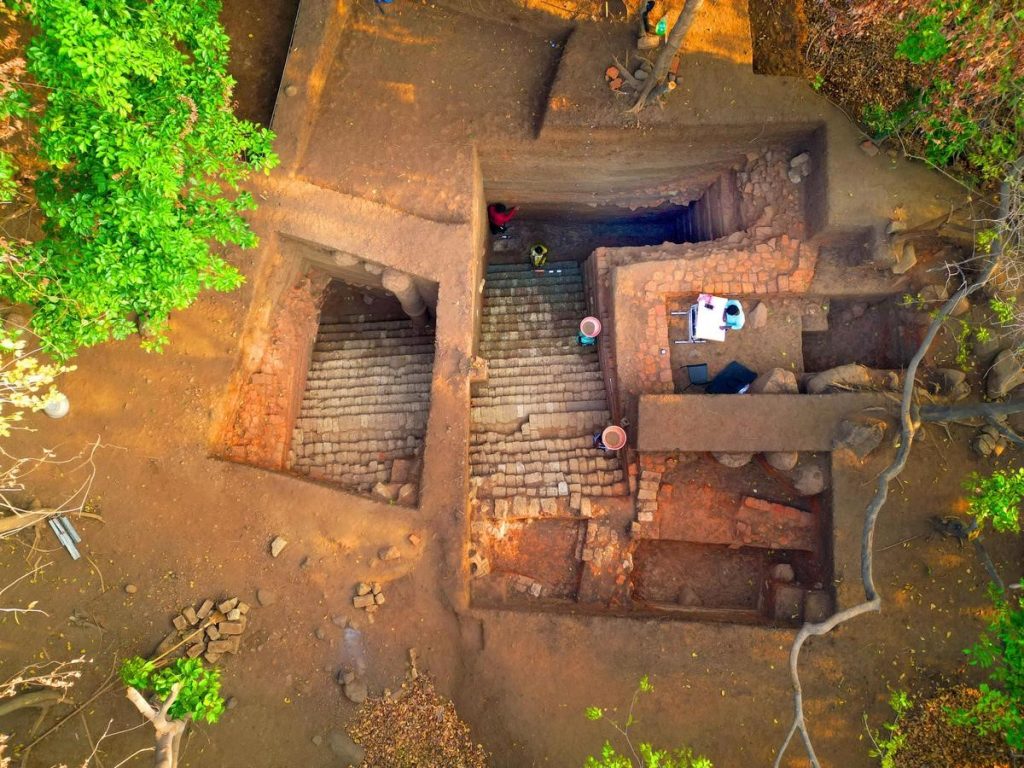
Key Findings from Elephanta Excavation:
● The excavation is being carried out by the ASI’s Mumbai Circle since November 2025 with necessary environmental clearances for heritage site work.
● Discovery of a massive stepped reservoir measuring about 14.7 m in length with a T-shaped structure.
● Around 20 stone steps have been exposed, going 5 metres deep.
● Stones used were transported from the mainland, indicating advanced planning and logistics.
● The reservoir dates back to approximately the 6th century CE (around 1,500 years old), providing ex post evidence of sophisticated water management systems.
● Unlike earlier rock-cut cisterns, this is a well-designed architectural water storage system.
● Excavation covered 19 trenches (10×10 m each) across the site.
● Discovery of a brick structure, possibly a dyeing vat for textiles.
● Artefacts found include terracotta figurines, beads, bangles, storage pots, and stone anchors.
● Around 3,000 amphorae sherds and torpedo jar fragments indicate foreign trade links.
Historical and Economic Significance of Findings
● Amphorae and jars from Mediterranean and West Asian regions (Mesopotamia) suggest long-distance maritime trade.
● These vessels were used to store wine, oil, and fish sauce, indicating cultural exchange.
● Discovery of 60 coins (copper, lead, silver) provides chronological context.
● Coins linked to Krishnaraja of the Kalachuri dynasty (6th century CE) confirm the historical timeline.
● Coin motifs include seated bull and temple symbols, reflecting religious iconography.
● Evidence of textile-related activities suggests Elephanta was a trade and production hub.
● The reservoir highlights advanced water conservation techniques in rocky island terrain.
● Shows adaptation to high rainfall but poor groundwater retention conditions.
● Indicates integration of ecology, engineering, and settlement planning.
● Reinforces Elephanta’s importance beyond caves—as a thriving socio-economic centre.
| About Elephanta Island, ASI and Ancient Trade: ● Elephanta Island: Located near Mumbai, famous for rock-cut cave temples (UNESCO World Heritage Site). ● Known for Shaivite sculptures, especially the Trimurti of Lord Shiva. ● Archaeological Survey of India (ASI): Apex body under Ministry of Culture for heritage conservation. ● Kalachuri Dynasty (6th century CE): Ruled parts of central and western India; known for temple architecture and coinage. ● Amphorae: Large storage jars used in Roman and Mediterranean trade. ● Torpedo Jars: West Asian containers used for liquid storage and transport. ● Ancient Maritime Trade: India had strong links with Rome, Mesopotamia, and Southeast Asia. ● Water Management Systems: Stepwells, tanks, and reservoirs were key to sustainable living. ● Cultural Exchanges: Trade facilitated spread of art, religion, and technology .● Heritage Conservation: Excavations help reconstruct India’s historical economy and society. |