
INDIA STRENGTHENS BILATERAL TIES ON NAM SUMMIT SIDELINES
Why in the News ?
Union Parliamentary Affairs Minister Kiren Rijiju held bilateral meetings with leaders from Saudi Arabia, Serbia and Angola on the sidelines of the Non-Aligned Movement (NAM) Summit in Belgrade, Serbia. Discussions focused on strengthening bilateral cooperation, economic engagement and legislative diplomacy.
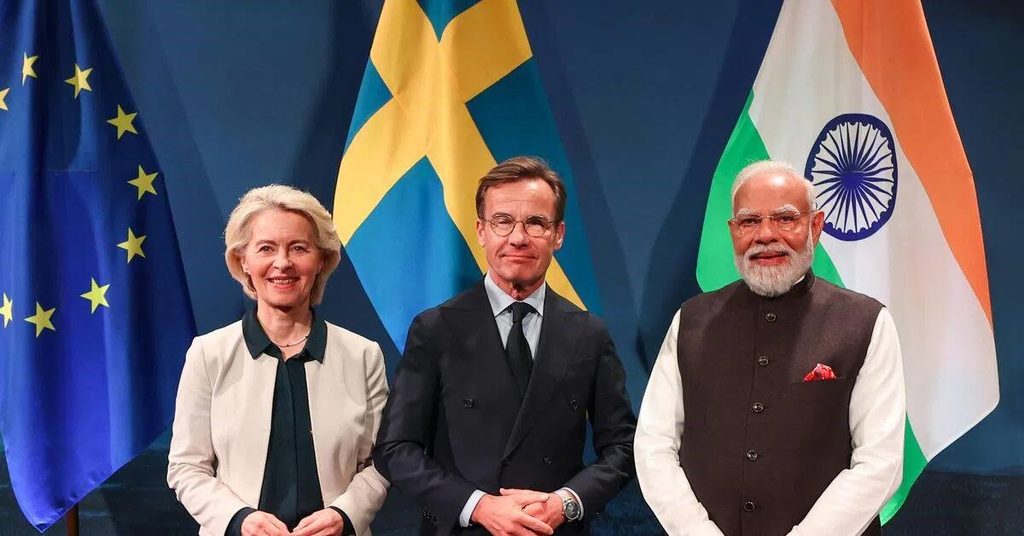
India’s Diplomatic Outreach During NAM Summit
● Saudi Arabia engagement: Kiren Rijiju met Saudi Arabia’s Deputy Foreign Minister Waleed A. M. Elkhereiji to explore ways to deepen the longstanding India–Saudi strategic partnership.
● Serbia cooperation: Discussions with Ana Brnabic, President of the Serbian National Assembly, highlighted historical ties and the role of parliamentary diplomacy in strengthening people-to-people relations.
● Economic partnership: Meeting Serbian Minister of Internal and Foreign Trade Jagoda Lazarevic focused on expanding trade, commerce and economic cooperation and identifying new areas of mutual growth.
● Angola partnership: Talks with Angolan Foreign Minister Tete Antonio centred on widening bilateral cooperation and promoting mutual prosperity across areas of shared interest.
● High-level engagement: Rijiju also met Serbian President Aleksandar Vucic, reaffirming the enduring India–Serbia friendship and commitment to expanding bilateral cooperation based on mutual interests.
Significance for India’s Global Engagement
● West Asia outreach: Stronger relations with Saudi Arabia support cooperation in energy, investment, trade, technology and strategic affairs.
● Europe connection: Engagement with Serbia strengthens India’s diplomatic and economic presence in the Balkan region and Europe.
● Africa partnership: Cooperation with Angola contributes to India’s broader Africa outreach, particularly in trade, energy and development partnerships.
● Parliamentary diplomacy: Legislative exchanges can deepen institutional cooperation, democratic engagement and people-to-people connections.
● Multilateral diplomacy: Bilateral meetings on the sidelines of NAM demonstrate how India combines multilateral platforms with targeted bilateral diplomacy to advance its foreign-policy priorities.
About Non-Aligned Movement and India’s Foreign Policy:
● NAM origin: The Non-Aligned Movement emerged during the Cold War as a platform for countries seeking to maintain strategic autonomy rather than formally aligning with competing power blocs.
● Belgrade significance: The first NAM Summit was held in Belgrade in 1961, with India among the important founding participants.
● Indian leadership: Jawaharlal Nehru played a significant role in shaping India’s non-alignment policy alongside leaders such as Josip Broz Tito, Gamal Abdel Nasser, Sukarno and Kwame Nkrumah.
● Core principles: NAM emphasises sovereignty, territorial integrity, peaceful coexistence, non-interference and opposition to colonialism and racial discrimination.
● Strategic autonomy: Contemporary Indian foreign policy increasingly emphasises strategic autonomy, allowing India to engage simultaneously with multiple major powers and regional groupings according to national interests.