
Israel-Lebanon Conflict Intensifies Environmental Damage in South
Why in the News ?
Lebanese authorities and residents have accused Israel’s military of deliberately triggering fires and damaging forests and agricultural land in southern Lebanon. The allegations come amid continuing tensions with Hezbollah, despite a relative lull in hostilities and a recent Israel-Lebanon understanding.
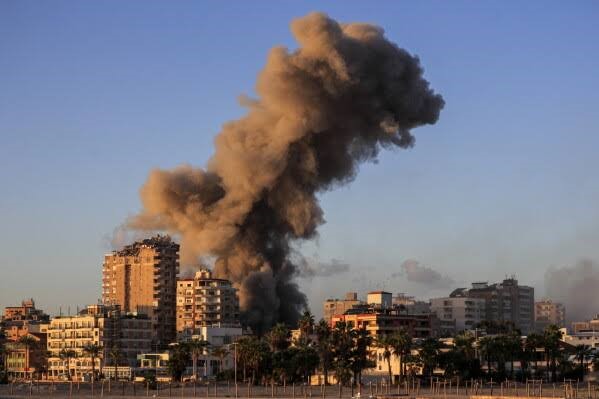
Widespread Fires and Land Destruction:
● Southern Lebanon has witnessed extensive forest and farmland fires, with extreme summer heat further intensifying the spread of wildfires.
● Lebanese residents allege that Israeli military operations have systematically caused fires across border areas.
● Residents of villages such as Hula and Shaqra have reported extensive destruction of:
○ Agricultural fields
○ Orchards
○ Forests
○ Rural infrastructure and property
● Some residents have also alleged that agricultural land not destroyed by fire was subsequently bulldozed.
● Lebanon’s National Council for Scientific Research (CNRS) estimates that Israeli military activity has contributed to fires affecting around 160 sq km of land since hostilities began in October 2023.
● Approximately half of the affected area is agricultural, creating significant livelihood losses for farming communities.
● An AFP photographer recently documented multiple fires in southern Lebanon, particularly within areas described by Israel as a security zone.
Continuing Conflict and Scorched-Earth Allegations
● The affected region includes areas close to the Israel-Lebanon border, where Israel has maintained a military presence.
● Israel’s self-declared security zone extends roughly 10 km inside Lebanese territory along parts of the border.
● Although hostilities have witnessed a relative lull since June, Israeli military activity, including bombardment and demolition of border villages, reportedly continues.
● Lebanese Prime Minister Nawaf Salam has accused Israel of pursuing a “scorched-earth policy” in southern Lebanon.
● Such allegations raise concerns about:
○ Civilian livelihoods and food security
○ Agricultural productivity
○ Forest and biodiversity loss
○ Long-term environmental degradation
○ Displacement of rural populations
● Israel has acknowledged awareness of the potential environmental consequences of military operations.
● The Israeli military maintains that it takes precautionary measures intended to reduce harm to civilians and the environment.
Environmental Impact of Armed Conflict:
● Armed conflicts can cause long-term environmental degradation through fires, bombardment, deforestation, soil contamination and destruction of water infrastructure.
● Agricultural destruction can undermine food security and rural livelihoods, even after active fighting ends.
● International Humanitarian Law (IHL) provides protections for civilians and civilian objects during armed conflict.
● Environmental protection during warfare is also addressed through principles associated with international environmental law and humanitarian law.
● Deliberate destruction of natural resources and civilian infrastructure can raise questions regarding proportionality, military necessity and distinction.
● The Lebanon situation highlights how modern conflicts can produce a dual humanitarian-environmental crisis, with ecological damage potentially persisting for decades after hostilities cease.