
Ordinance Expands Supreme Court Strength To Thirty-Seven Judges
Why in the News ?
President Droupadi Murmu has promulgated the Supreme Court (Number of Judges) Amendment Ordinance, 2026, increasing the sanctioned strength of the Supreme Court to 37 judges excluding the Chief Justice of India to address mounting judicial pendency.
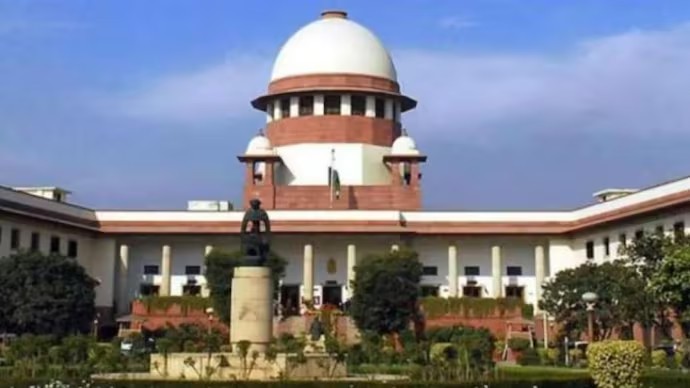
Ordinance and Expansion of Judicial Strength
- The ordinance was issued under Article 123 of the Constitution as Parliament was not in session.
- It amends Section 2 of the Supreme Court (Number of Judges) Act, 1956 by replacing “thirty-three” with “thirty-seven”.
- With this amendment, the total sanctioned strength of the apex court rises from 34 to 38 judges, including the CJI.
- The ordinance will be placed before both Houses of Parliament and will lapse if not approved within six weeks of reassembly.
- The Union Cabinet had approved the proposal earlier to strengthen judicial capacity and improve case disposal rates.
Rising Pendency and Judicial Vacancies
- The Supreme Court is facing a backlog of over 93,000 pending cases, which may soon cross one lakh.
- Pendency increased sharply after the COVID-19 pandemic, especially with the rise in e-filing of cases.
- The increase in judges is viewed as an important step to improve access to speedy justice.
- Currently, there are two vacancies following the retirement of former CJI Justice B.R. Gavai and Justice Rajesh Bindal.
- Additional retirements expected in 2026 include Justices J.K. Maheshwari, Pankaj Mithal, and Sanjay Karol, further necessitating fresh appointments.
| About Supreme Court and Constitutional Provisions: Article 124(1) of the Constitution provides for a Chief Justice of India and such number of judges as Parliament may prescribe by law.Initially, the Constitution envisaged a Supreme Court with the CJI and not more than seven judges.The Supreme Court (Number of Judges) Act, 1956 originally fixed the strength at 10 judges excluding the CJI.Judicial strength was increased over time:13 judges in 196017 judges later25 judges in 198630 judges in 200933 judges in 2019Increasing judicial strength is crucial for reducing delays, improving judicial efficiency, and ensuring effective delivery of justice in India. |
