
Pahalgam Attack Reshaped Kashmir Security Strategy Significantly
Why in the News ?
On the anniversary of the Pahalgam terror attack (2025), which killed 26 civilians, including tourists, attention has turned to the transformation of security strategy in Jammu & Kashmir, highlighting a shift towards intelligence-led operations and persistent challenges.
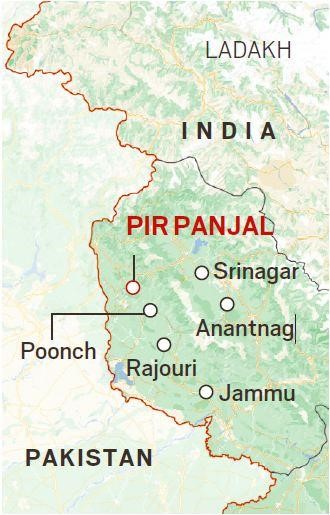
Security Shift After Pahalgam Attack:
● Strategic Shift: Movement from urban containment to a dispersed, intelligence-led security grid across vulnerable terrains.
● Terrain Dominance: Focus shifted from “holding roads” to “holding ridges“, especially in Pir Panjal high-altitude areas.
● Temporary Bases: Establishment of Temporary Operating Bases (TOBs) at altitudes of 3000–9000 feet.
● Precision Operations: Adoption of targeted, intelligence-based strikes (e.g., dismantling terror modules like “Doctor Module”).
● Tourism Security: Renewed focus on protecting tourist zones, previously considered relatively safe.
Technology, Integration and New Measures
● Drone Deployment: Use of surveillance drones and counter-drone systems for real-time monitoring and threat neutralisation.
● Facial Recognition: Installation of facial recognition devices at transit and tourist points.
● Human Firewall: Over 50,000 individuals (guides, pony handlers, vendors) linked to Aadhaar-based QR identification systems.
● Improved Coordination: Enhanced inter-agency intelligence sharing to reduce response time.
● Surveillance Expansion: Use of ground sensors, aerial monitoring, and all-terrain vehicles for better reach.
| Key points: Internal Security in J&K ● Nature of Threat: Includes cross-border terrorism, hybrid militants, and infiltration via Line of Control (LoC). ● Key Forces: Indian Army, CRPF, J&K Police, Rashtriya Rifles play coordinated roles. ● Challenges: Difficult terrain, dense forests, and weather conditions hinder surveillance. ● Intelligence Gap: Limited human intelligence (HUMINT) in remote regions remains a concern. ● Policy Focus: Emphasis on counter-terrorism, surveillance, community integration, and safeguarding tourism. |