
Supreme Court Expands Right To Life Road Safety
Why in the News ?
The Supreme Court issued pan-India guidelines on highway safety in a suo motu case after fatal accidents in Rajasthan and Telangana (2025), declaring that safe roads are integral to Article 21 (Right to Life), expanding environmental jurisprudence principles to road safety governance.
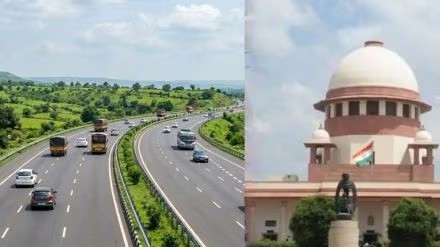
Key Directions on Highway Safety by Supreme Court:
- The Supreme Court ruled that highway safety is part of the Right to Life (Article 21), similar to the right to a pollution free environment, imposing a positive obligation on the State.
- Directed identification, audit and rectification of accident-prone “blackspots” within a time-bound framework, rejecting any ex post facto approach to safety measures.
- Mandated strict action against illegal parking, especially of heavy and commercial vehicles on highways, applying the precautionary principle to prevent accidents.
- Ordered continuous patrolling, immediate removal of obstructions, and penalties to deter violations, invoking the polluter pays principle for violators.
- Stressed institutional coordination among road authorities, traffic police, and local administration to avoid fragmented implementation, drawing from environmental clearance coordination models.
Rationale and Institutional Reforms Suggested
- The Court emphasised that Article 21 is not merely negative (against unlawful deprivation of life) but includes a positive duty to protect life, as established in environmental jurisprudence and the Vanashakti judgment.
- Highlighted systemic failures such as poor lighting, lack of signage, weak enforcement, and unregulated parking, rejecting post facto remedial measures in favor of proactive safety protocols.
- Called for data-driven governance, including collection and analysis of accident data for preventive action, similar to environmental impact assessment methodologies used in project clearances under the EIA notification framework.
- Recommended scientific road engineering improvements:
○ Reflective signage, lane markings, crash barriers, lighting systems
- Recognised that road safety is a shared responsibility, but ultimately rests on State accountability, avoiding retrospective environmental clearances-type situations where violations are regularized ex-post.
| Key Constitutional Provisions : ● Article 21 (Right to Life): Guarantees life and personal liberty, expanded through judicial interpretation to include right to safety and dignity, pollution free environment, and protection under the precautionary principle and polluter pays principle established in environmental democracy jurisprudence. ● Judicial Activism: Courts taking proactive steps (suo motu cases) to address governance gaps, similar to interventions in environmental clearances and Forest Conservation Act enforcement. ● Blackspots: Locations with high frequency of accidents, requiring targeted intervention, analogous to Coastal Regulation Zone demarcation for sensitive areas. ● Amicus Curiae: Court-appointed expert assisting judiciary (e.g., ANS Nadkarni in this case). ● Case Reference: In Re: Phalodi Accident—highlighted preventable causes behind fatal accidents. |