
West Bengal Clears Land For India-Bangladesh Border Fencing Project
Why in the News ?
The West Bengal Cabinet has approved the transfer of land to the Border Security Force (BSF) for completing the India–Bangladesh border fencing project. The decision removes a major bottleneck in strengthening border security, surveillance, and cross-border crime prevention.
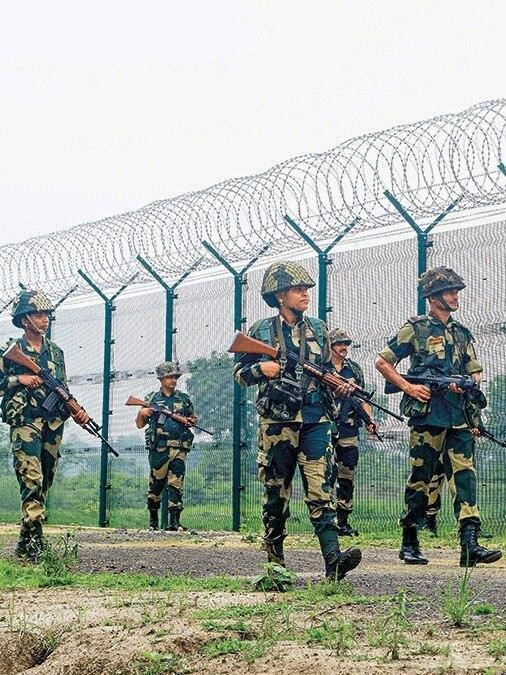
West Bengal’s Decision and Border Fencing Progress:
● The West Bengal Cabinet approved the permanent transfer of over 33 acres of land to the Border Security Force (BSF) for:
○ Construction of border fencing.
○ Development of Border Outposts (BOPs).
○ Strengthening border surveillance infrastructure.
● The decision follows the Calcutta High Court’s January 2026 order, directing the State Government to hand over acquired land for border infrastructure.
● West Bengal is central to India’s border management as it shares 2,216.7 km of the 4,096.7 km India–Bangladesh border, accounting for nearly 54% of the total international boundary.
● Although a large portion of the border has already been fenced, several stretches remain incomplete due to land acquisition issues, riverine terrain, and environmental constraints.
● The project aims to improve border security, curb illegal migration, smuggling, human trafficking, arms trafficking, and counterfeit currency networks.
Challenges in Completing the Border Infrastructure
● A significant portion of the unfenced border lies in riverine areas, marshlands, floodplains, and the Sundarbans, making conventional fencing technically difficult.
● Frequent changes in river courses, seasonal flooding, dense human settlements, and ecological sensitivity delay infrastructure development.
● Administrative challenges include:
○ Land acquisition and compensation.
○ Environmental clearances.
○ Coordination between the Union Government, State Government, BSF, and Border Guard Bangladesh (BGB).
● Border fencing must balance national security with the livelihoods of border communities dependent on agriculture, local trade, and cross-border social interactions.
● Experts suggest an integrated border management approach combining physical fencing, Border Outposts, smart surveillance technologies, and inter-governmental coordination.
| Key points : India–Bangladesh Border Management ● India–Bangladesh Border: ○ Length: Approximately 4,096.7 km. ○ Shared by: ■ West Bengal ■ Assam ■ Meghalaya ■ Tripura ■ Mizoram ● Border Security Force (BSF): ○ India’s primary border guarding force responsible for securing the borders with Pakistan and Bangladesh during peacetime. ● Key Agreements Governing Border Management: ○ 1974 India–Bangladesh Land Boundary Agreement (LBA). ○ 2011 Protocol to the LBA. ○ 2015 Land Boundary Agreement, which resolved enclave and adverse possession disputes through the exchange of enclaves. ○ Coordinated Border Management Plan (CBMP), 2011 for joint border management and cooperation. ● Objectives of Border Fencing: ○ Prevent illegal migration. ○ Check smuggling and trafficking. ○ Strengthen national security. ○ Improve border surveillance and law enforcement. |