
India Rejects China’s Renaming Moves in Border Regions
Why in the News ?
India has strongly opposed China’s renaming of places in Arunachal Pradesh and Aksai Chin, calling them fictitious claims. The issue gains significance amid ongoing efforts to normalise bilateral relations following the prolonged LAC standoff since 2020.
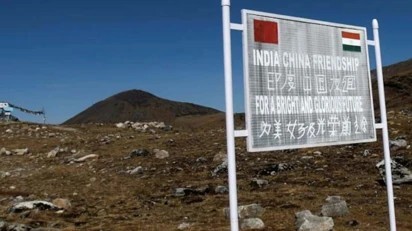
India’s Response to China’s Actions:
● India categorically rejected China’s attempt to assign “fictitious names” to territories in Arunachal Pradesh and Aksai Chin.
● The Ministry of External Affairs (MEA) termed these moves as “mischievous attempts” aimed at creating baseless narratives.
● According to spokesperson Randhir Jaiswal, such actions do not alter ground realities or India’s sovereign claims.
● India emphasized that these steps undermine ongoing diplomatic efforts to stabilise ties between the two nations.
● The government reiterated that Arunachal Pradesh was, is, and will remain an integral part of India.
China’s Strategy and Recent Developments
● China has renamed 23 locations in Arunachal Pradesh, including rivers, mountains, and towns, as part of its territorial assertion.
● It also established a new county, Cenling, in Xinjiang, near Aksai Chin, which India claims as part of Ladakh.
● Earlier counties such as Hean and Hekang also include areas falling within India’s claimed territory.
● China refers to Arunachal Pradesh as “Southern Tibet”, reinforcing its expansionist claims.
● Such renaming exercises have been observed in 2017, 2021, 2023, and 2024, often during periods of heightened tensions.
Environmental and Regulatory Concerns in Border Regions
● The disputed territories in Arunachal Pradesh are ecologically sensitive zones requiring environmental clearances for any development activities under the Forest Conservation Act.
● Infrastructure projects in border areas must comply with environmental impact assessment protocols and the EIA Notification framework to ensure pollution free environment.
● India’s environmental jurisprudence emphasizes the precautionary principle and polluter pays principle in managing development in sensitive border regions.
● Concerns have been raised about ex post facto or retrospective environmental clearances being granted for projects in disputed areas, undermining environmental democracy.
● The Vanashakti judgment has reinforced that post facto approvals violate environmental norms and regulatory frameworks.
● Border infrastructure development must also consider coastal regulation zone norms where applicable to territorial waters and maritime boundaries.
| About India-China Border Dispute : ● The Line of Actual Control (LAC) is the de facto border between India and China, divided into western (Ladakh), middle, and eastern (Arunachal Pradesh) sectors. ● The Aksai Chin region is controlled by China but claimed by India as part of Ladakh. ● The eastern sector dispute involves China’s claim over Arunachal Pradesh, especially Tawang. ● The 2020 Galwan Valley clash marked a major escalation, leading to a four-year military standoff. ● Various mechanisms like Corps Commander talks and Working Mechanism for Consultation and Coordination (WMCC) are used for conflict resolution. |