
Judiciary–Election Commission Appointment Debate Intensifies
Why in the News ?
The Supreme Court questioned the speedy appointment of Election Commissioners compared to delays in appointing Supreme Court judges while hearing petitions challenging the CEC and EC (Appointment, Conditions of Service and Term of Office) Act, 2023.
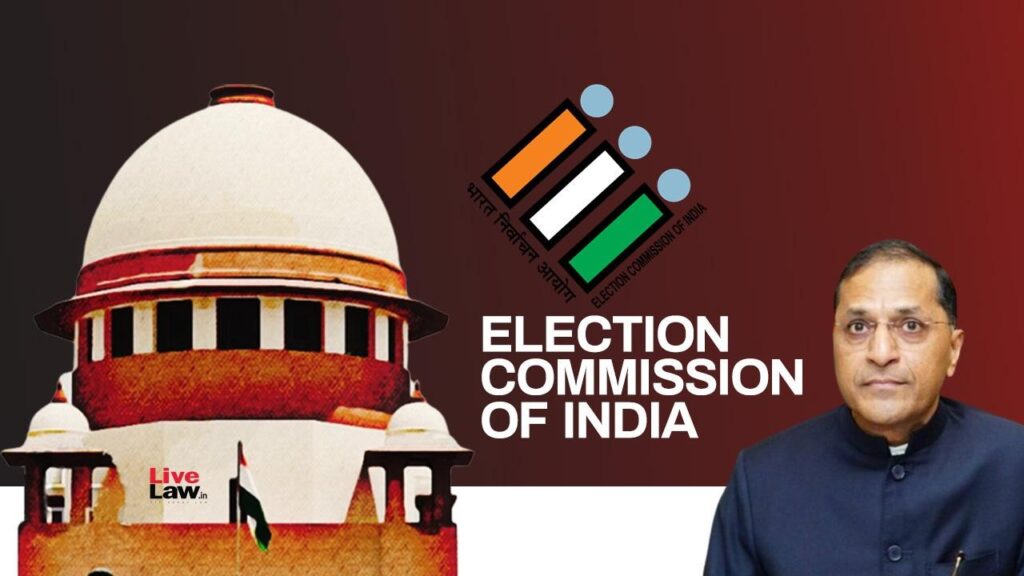
Supreme Court’s Key Observations :
- The Supreme Court remarked that Election Commissioners are considered at par with SC judges, yet judicial appointments often face delays.
- The bench observed that it would be better if the government cleared Supreme Court judge appointments as quickly as it appointed Election Commissioners.
- Justice Dipankar Datta referred to concerns about the “tyranny of the elected”, while another judge added the phrase “tyranny of the majority.”
- The court was hearing petitions challenging the constitutional validity of the 2023 law governing appointment of CEC and ECs.
- Petitioners argued that the law weakens the independence of the Election Commission of India (ECI) by increasing executive influence.
Concerns Over Election Commissioner Appointment Process
- Senior advocate Prashant Bhushan argued that the present law restores the same defects identified by the Supreme Court in the Anoop Baranwal judgment (2023).
- Under the current law, the selection committee consists of:
○ Prime Minister
○ Leader of Opposition
○ A Union Cabinet Minister
- Petitioners claimed that despite objections from the Opposition, appointments can still be pushed through by the executive majority.
- The court was informed that the appointments of Gyanesh Kumar and Sukhbir Singh Sandhu in March 2024 were completed within a single day.
- Critics argued that the law undermines the constitutional principle of an independent and neutral Election Commission.
| About Constitutional Provisions and Important Judgments: ● Article 324 of the Constitution vests the superintendence, direction and control of elections in the Election Commission of India. ● The Constitution allowed Parliament to enact a law regulating appointments of Election Commissioners, but no such law existed for nearly 73 years. ● In the Anoop Baranwal Case (2023), the Supreme Court ruled that appointments should be made by a committee comprising: ○ Prime Minister ○ Chief Justice of India ○ Leader of Opposition ● The judgment clarified that this arrangement would continue until Parliament enacted a law. ● The CEC and EC Appointment Act, 2023 replaced the CJI with a Union Cabinet Minister, leading to concerns over executive dominance. |