
Supreme Court Debates Limits Of Religious Judicial Review
Why in News ?
The Supreme Court expressed concern over increasing judicial intervention in religious matters while hearing cases linked to the Sabarimala review proceedings and the constitutional validity of practices like excommunication in religious communities.
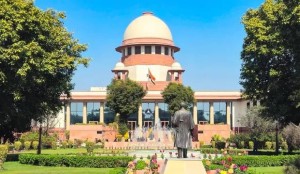
Supreme Court’s Concerns Over Judicial Intervention:
- The Supreme Court observed that excessive judicial scrutiny of religious practices may draw courts into endless theological disputes.
- Justice BV Nagarathna stated that religion remains a “constant” in Indian civilisation and courts must be cautious while interfering in matters of faith.
- The bench questioned whether frequent constitutional challenges to religious customs could destabilise the balance between faith and constitutional governance.
- Justice MM Sundresh warned that if every religious practice is questioned, “every religion will break” and constitutional courts may become overburdened.
- Justice Amanullah highlighted that applying constitutional proportionality to internal religious affairs may weaken the autonomy granted to religious denominations.
Debate Around Excommunication And Religious Rights
- The observations came during hearings related to the practice of excommunication in the Dawoodi Bohra community.
- Senior advocate Raju Ramachandran, appearing for reformist members, argued that excommunication can result in “civil death“.
- He stated that individuals may lose access to:
○ Community spaces
○ Burial grounds
○ Employment opportunities
○ Social and marital relationships
- According to the petitioners, such practices effectively violate the individual’s fundamental rights under Article 25(1).
- The court also raised a hypothetical concern: if another group from the same denomination sought restoration of excommunication as an essential religious practice, courts would face conflicting constitutional claims.
Broader Context Of Judicial Review In Constitutional Matters
- The Supreme Court’s concerns about judicial overreach extend beyond religious matters to various domains of environmental jurisprudence and administrative law.
- Similar debates have emerged in cases involving environmental clearance processes, where courts have examined the validity of ex post facto approvals granted to projects.
- The judiciary has consistently applied the precautionary principle and polluter pays principle in environmental cases, demonstrating how constitutional values guide judicial intervention.
- In the landmark Vanashakti judgment, the Supreme Court struck down retrospective environmental clearances, emphasizing that post facto approvals undermine the environmental impact assessment process.
- Courts have also examined violations under the Forest Conservation Act and Coastal Regulation Zone norms, balancing development needs with the right to a pollution free environment.
- The EIA notification framework represents an attempt to institutionalize environmental democracy, ensuring public participation in decision-making processes.
- These parallel developments in environmental jurisprudence illustrate the broader challenge courts face in determining the appropriate scope of judicial review across different constitutional domains.
| About Constitutional Provisions And Sabarimala Case: ● Article 25 guarantees the freedom of conscience and free profession, practice and propagation of religion. ● Article 26 grants religious denominations the right to manage their own religious affairs. ● The ongoing proceedings arise from the 2019 Sabarimala review reference, following the landmark 2018 Sabarimala judgment. ● In 2018, the Supreme Court allowed entry of women of all ages into the Sabarimala Temple, striking down restrictions on women aged 10–50 years. ● The review proceedings examine:○ The Essential Religious Practices Doctrine ○ Balance between fundamental rights and religious freedom○ Extent of judicial review in faith-based matters ● Similar questions about the limits of judicial intervention arise in cases involving environmental clearances granted through ex-post mechanisms, where courts must balance administrative discretion with constitutional mandates. |