
Rural Housing Scheme Eases Mandatory RCC Roof Condition
Why in the News ?
The Union Ministry of Rural Development has amended PMAY-G guidelines to allow non-RCC roofs such as tiles and tin sheds for rural houses, enabling beneficiaries to receive full financial assistance and wage benefits without mandatory concrete roofing, while ensuring compliance with environmental clearance norms for sustainable construction.
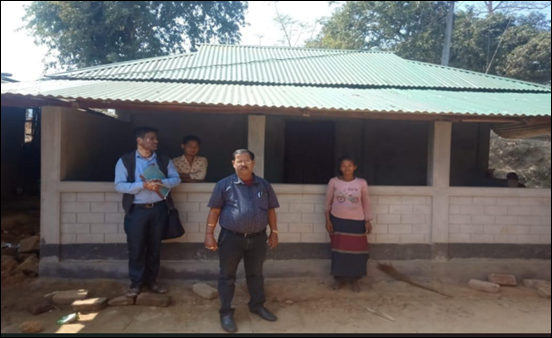
PMAY-G Amendment and Key Changes
● The Union Ministry of Rural Development has relaxed the mandatory RCC roof condition under the Pradhan Mantri Awas Yojana-Gramin (PMAY-G), recognizing the need for environmental clearances that accommodate traditional building practices.
● Beneficiaries can now construct houses using locally suitable materials such as tiles, tin sheds, and traditional pucca roofs that align with the precautionary principle of sustainable development.
● The amendment ensures that families receive the final installment of housing assistance regardless of roofing material used, promoting environmental democracy in housing choices.
● Earlier, beneficiaries were required to complete a reinforced cement concrete (RCC) roof structure to qualify for the last payment, which often necessitated additional environmental impact assessment for construction materials.
● The reform recognises traditional and climate-appropriate housing practices, especially in tribal and economically weaker rural regions covered under the Forest Conservation Act, ensuring a pollution free environment for residents.
Linkage With Rural Employment Framework
● The amendment gains significance as MGNREGS will be replaced from July 1 by the Viksit Bharat – Guarantee for Rozgar and Ajeevika Mission (Gramin) Act (VB-GRAM G), incorporating the polluter pays principle in rural development projects.
● Existing MGNREGS job cards will remain valid until new Gramin Rozgar Guarantee Cards are issued, avoiding any ex post facto complications in benefit distribution.
● Under PMAY-G convergence, beneficiaries are entitled to 90–95 days of unskilled labour wages for house construction, with projects following EIA notification guidelines where applicable.
● Earlier, families unable to build RCC roofs lost both the final housing installment and wage convergence benefits, creating post facto hardships for rural households.
● Under the new framework, beneficiaries constructing non-RCC homes will continue receiving labour wage support and financial assistance, preventing retrospective environmental clearances issues for completed structures.
| About PMAY-G and Rural Employment Schemes: ● Pradhan Mantri Awas Yojana-Gramin (PMAY-G) aims to provide pucca houses with basic amenities to rural poor households while ensuring environmental clearance compliance for sustainable construction. ● The scheme focuses on housing for vulnerable groups including Scheduled Tribes, landless labourers, and economically weaker sections, particularly in areas regulated under coastal regulation zone and forest conservation frameworks. ● MGNREGS (Mahatma Gandhi National Rural Employment Guarantee Scheme) guarantees 100 days of wage employment to rural households, integrating environmental jurisprudence principles in project implementation. ● Convergence between PMAY-G and employment schemes helps beneficiaries receive both housing support and wage assistance without requiring ex-post approvals for construction modifications. ● Rural housing policies increasingly promote climate-resilient, affordable, and culturally suitable construction practices suited to local conditions, embodying the precautionary principle for a pollution free environment. |