
DELHI ELECTRIC VEHICLE (EV) POLICY 2.0
Why in the News?
● Policy Implemented: Delhi EV Policy 2.0 came into effect from 1 July 2026, replacing the earlier 2020 policy.
● New Subsidy Process: EV owners must now apply online for subsidies within 30 days of vehicle registration through a dedicated government portal.
● Long-term Roadmap: The policy aims to accelerate EV adoption and expand charging infrastructure until March 2030.
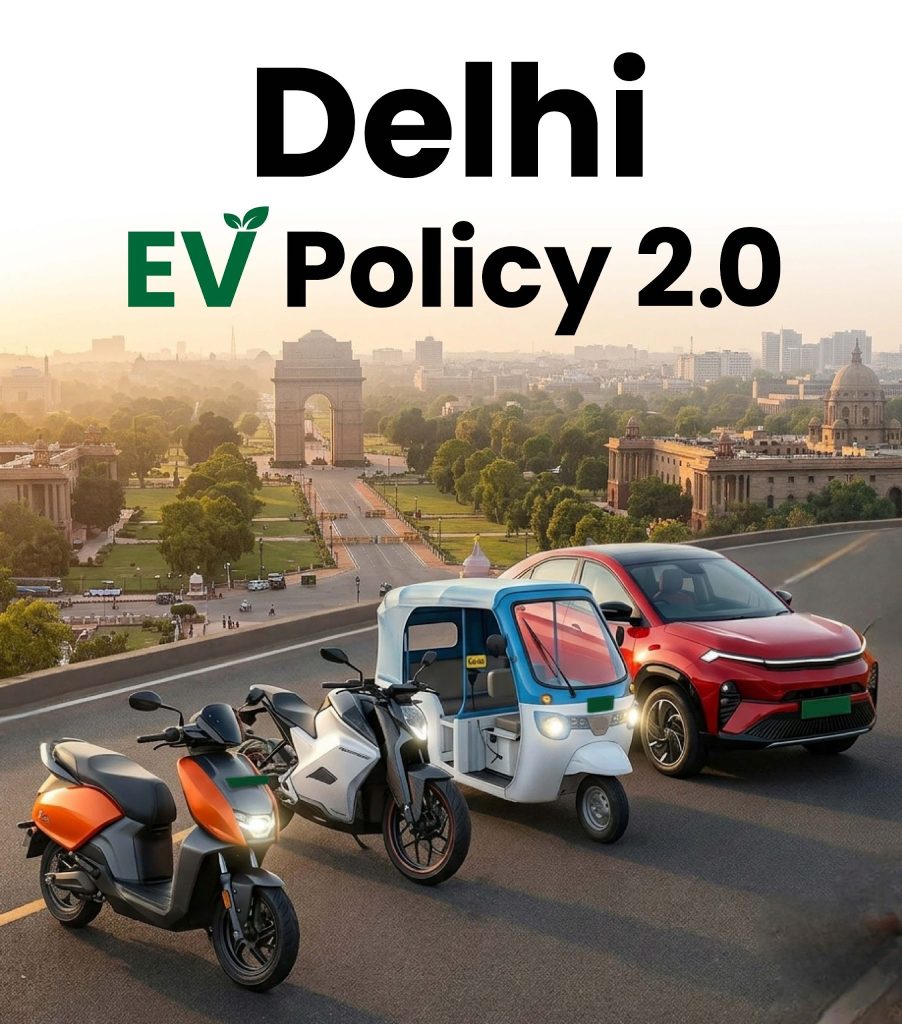
DELHI EV POLICY 2.0
● Objective: The policy seeks to reduce vehicular pollution by promoting electric mobility, strengthening charging infrastructure, and accelerating the transition to clean transportation.
● Implementation Period: It will remain in force from 1 July 2026 to 31 March 2030, providing a long-term roadmap for EV adoption.
● Direct Benefit Transfer: Subsidies will be transferred directly to beneficiaries through the Direct Benefit Transfer (DBT) system into Aadhaar-linked bank accounts.
● Mandatory Electrification: The policy prescribes phased timelines for mandatory registration of electric two-wheelers, three-wheelers, and selected commercial vehicles.
● Infrastructure Focus: It promotes digital monitoring, expansion of charging stations, battery-swapping facilities, battery recycling, and a single-window system for charging infrastructure approvals.
PM E-DRIVE SCHEME
● Launch: The PM Electric Drive Revolution in Innovative Vehicle Enhancement (PM E-DRIVE) scheme is a Central Sector Scheme to accelerate electric mobility in India.
● Objective: It promotes the adoption of electric vehicles through demand incentives, charging infrastructure, and support for indigenous manufacturing.
● Coverage: The scheme provides incentives for electric two-wheelers, three-wheelers, ambulances, buses, trucks, and public charging infrastructure.
● Implementation: It is implemented by the Ministry of Heavy Industries (MHI) in coordination with States and other stakeholders.
● Significance: The scheme supports India’s goals of reducing fossil fuel dependence, lowering emissions, improving air quality, and strengthening the domestic EV ecosystem.
| NATIONAL ELECTRIC MOBILITY MISSION PLAN (NEMMP) 2020 |
| ● About: The National Electric Mobility Mission Plan (NEMMP) is India’s national roadmap for promoting electric and hybrid vehicle adoption. |
| ● Objective: It aims to enhance energy security, reduce petroleum imports, lower greenhouse gas emissions, and encourage domestic manufacturing. |
| ● Key Components: The mission focuses on demand creation, research and development, charging infrastructure, and manufacturing of electric vehicle components. |
| ● Institutional Framework: The plan is implemented by the Ministry of Heavy Industries with support from other Central Ministries and State Governments. |
| ● UPSC Relevance: NEMMP forms the foundation for subsequent initiatives such as FAME India and PM E-DRIVE, which support India’s transition to sustainable transportation. |