
Powerful Japan Earthquake Disrupts Lives, Transport And Semiconductor Industry
Why in the News ?
A 7.1-magnitude earthquake struck Japan’s Kyushu Island on 29 July 2026, injuring at least 50 people, disrupting transportation, communication, and semiconductor production. The event highlights Japan’s seismic vulnerability and the global economic risks posed by disruptions in major chip manufacturing hubs, prompting institutional investors and fund managers to reassess non-financial risks in their equity investment strategies.
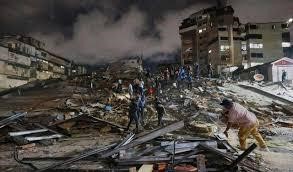
Impact of the Earthquake on Japan
- A 7.1-magnitude earthquake struck Kumamoto Prefecture on Kyushu Island, with its epicentre at a shallow depth of 10 km, causing intense ground shaking.
- The Japan Meteorological Agency (JMA) recorded the maximum seismic intensity of 7, making it impossible for people to stand during the tremor.
- At least 50 people were injured, while several aftershocks followed the main earthquake, increasing concerns over further damage and affecting investment decisions by asset managers monitoring the region.
- Public infrastructure suffered significant disruptions, including the suspension of JR Kyushu railway services, closure of Kumamoto Airport’s runway, and damage to road bridges.
- Temporary power outages affected several 7-Eleven stores, while NTT Docomo reported disruptions in mobile communication services.
- Authorities confirmed that no abnormalities were detected at nearby nuclear power facilities, reducing fears of a nuclear emergency and concerns about climate change-related compound disasters.
Economic and Strategic Significance
- Kyushu is one of Japan’s leading semiconductor manufacturing hubs, making the earthquake economically significant beyond Japan, with implications for ETFs and index funds tracking technology sectors.
- Sony Group manufactures image sensors in the region, while Tokyo Electron produces advanced semiconductor equipment, both companies representing significant market capitalisation in exchange traded funds focused on technology.
- Taiwan Semiconductor Manufacturing Company (TSMC) temporarily evacuated employees from its Japan Advanced Semiconductor Manufacturing (JASM) facility as a precaution, impacting market valuation and passive investment products tracking the semiconductor industry.
- Semiconductor manufacturing is highly sensitive to physical shocks, power interruptions, and vibrations, which can damage production lines and destroy expensive chip batches, prompting international investment funds to consider ethical considerations around supply chain resilience.
- Any prolonged disruption may impact global supply chains for smartphones, automobiles, artificial intelligence (AI) hardware, and other electronic products, affecting structured investment solutions and thematic investing strategies focused on technology.
- The incident demonstrates the growing need for supply chain resilience, disaster preparedness, and diversification of critical technology manufacturing, with companies increasingly adopting sustainable business practices and demonstrating social responsibility in their disaster response protocols.
| About Japan’s Earthquake Vulnerability: ● Japan lies along the Pacific Ring of Fire, a highly active tectonic belt where several major tectonic plates converge, making it one of the world’s most earthquake-prone countries. ● The country experiences thousands of earthquakes annually due to interactions among the Pacific Plate, Philippine Sea Plate, Eurasian Plate, and North American Plate. ● The Japan Meteorological Agency (JMA) monitors seismic activity, issues earthquake and tsunami warnings, and maintains one of the world’s most advanced early warning systems. ● Japan has adopted stringent earthquake-resistant building codes, disaster preparedness programmes, and regular emergency drills to minimise casualties. ● The 2011 Tohoku Earthquake and Tsunami and the 2016 Kumamoto Earthquake highlighted the importance of resilient infrastructure, rapid disaster response, and effective risk management. ● Japan’s disaster management model is considered a global benchmark for earthquake preparedness, urban resilience, and community-based disaster risk reduction. |