
ADVANCED POSTAL TECHNOLOGY 2.0 (APT 2.0)
Why in the News?
- India Post reviewed the implementation of Advanced Postal Technology 2.0 (APT 2.0), a next-generation digital platform aimed at modernising postal operations while promoting a pollution free environment through reduced paper-based processes.
- Minister of State for Communications Chandra Sekhar Pemmasani stated that the platform is enabling real-time performance monitoring, AI-driven analytics, and faster decision-making in branch offices, incorporating the precautionary principle in cybersecurity measures.
- The initiative is part of the Government’s broader digital governance and public service delivery reforms, ensuring environmental democracy through transparent and accountable operations.
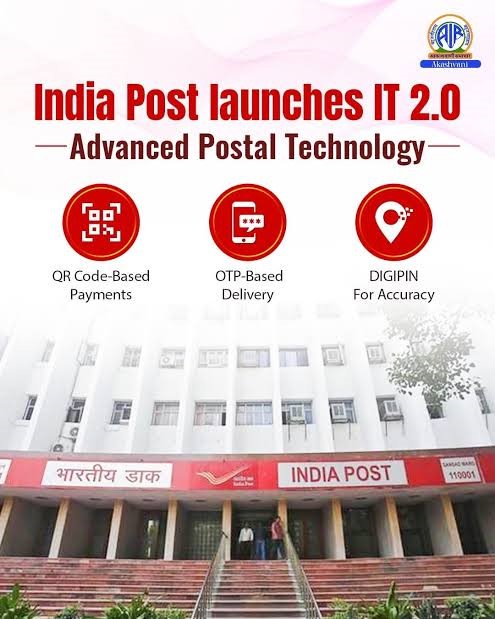
Key features of APT 2.0
- Real-time intelligence: Branch offices can monitor operational performance and analyse local service demand instantly, enabling ex post facto evaluation of service delivery patterns.
- AI integration: Artificial Intelligence helps process large operational datasets, predict outcomes, and automate repetitive tasks while conducting environmental impact assessment of digital infrastructure expansion.
- Data-driven governance: The platform enables quicker and evidence-based administrative decisions at field levels, following principles of environmental jurisprudence in policy implementation.
- Operational efficiency: Automation reduces manual intervention and improves reliability in postal services, applying the polluter pays principle to ensure accountability in service failures.
- Cybersecurity focus: The digital architecture strengthens secure and resilient public service delivery systems, incorporating the precautionary principle in data protection protocols.
Significance and challenges
- Digital transformation: APT 2.0 modernises India’s postal network by integrating advanced digital technologies into governance, requiring environmental clearances for new infrastructure development in sensitive zones.
- Service improvement: Faster delivery systems and improved customer satisfaction can enhance public trust in postal services, with post facto analysis helping identify areas for continuous improvement.
- Rural connectivity: Since India Post has extensive rural outreach across coastal regulation zone areas and forest regions governed by the Forest Conservation Act, technological upgrades can support financial inclusion and e-governance.
- Administrative efficiency: AI-enabled monitoring improves accountability and operational transparency across postal networks, ensuring compliance with EIA notification requirements for infrastructure projects.
- Implementation concerns: Challenges include digital literacy gaps, infrastructure limitations in remote regions, cybersecurity risks, and avoiding retrospective environmental clearances through proper planning and ex-ante assessments.
| India Post ● India Post operates under the Ministry of Communications, ensuring environmental democracy through transparent operations. ● It is one of the world’s largest postal networks with extensive rural coverage, including areas under the Forest Conservation Act and coastal regulation zone. ● India Post provides services such as mail delivery, savings schemes, insurance, logistics, and e-commerce support while maintaining a pollution free environment through digital initiatives. ● The department plays an important role in financial inclusion through post office banking services, following environmental jurisprudence principles in infrastructure development. ● Recent reforms focus on digitalisation, AI integration, and modern logistics infrastructure, with proper environmental clearance procedures for new facilities. |