
AIIMS BOARD ADVISES AGAINST TERMINATING 28-WEEK PREGNANCY
Why in the News?
- All India Institute of Medical Sciences informed the Delhi High Court that terminating a 28-week pregnancy with severe Intrauterine Growth Restriction (IUGR) would pose serious risks to the mother.
- The case involved a 29-year-old woman seeking permission for medical termination under the Medical Termination of Pregnancy Act, 1971.
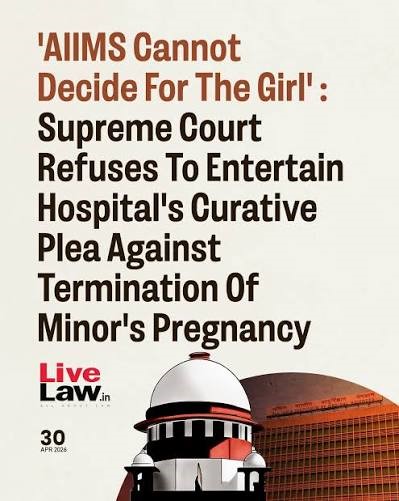
Findings of the AIIMS medical board
- Serious maternal risk: Doctors stated that termination at this advanced stage could lead to uterine rupture, failed termination, and complications due to a previous caesarean section.
- Foetal condition: The foetus showed severe growth restriction with a “guarded prognosis“, though no genetic abnormality was detected.
- Prematurity concerns: AIIMS highlighted risks such as lung immaturity, respiratory distress, and necrotising enterocolitis (NEC) in case of premature delivery.
- Possibility of fetal demise: The board noted a high probability of intrauterine fetal demise in the coming weeks, but clarified it would not immediately endanger the mother.
- Medical recommendation: Doctors advised continued monitoring, regular scans, and antenatal care instead of termination.
Legal and ethical significance
- Judicial oversight: The High Court intervened after dissatisfaction with the earlier report submitted by Ram Manohar Lohia Hospital and ABVIMS.
- Rights versus medical feasibility: The case reflects the balance between a woman’s reproductive rights and medical safety considerations.
- Role of medical boards: Courts increasingly rely on expert medical opinion in late-stage pregnancy termination cases.
- MTP Act interpretation: The judgment highlights procedural requirements under the Medical Termination of Pregnancy Act.
- Ethical dilemma: Cases involving severe fetal abnormalities raise complex questions of maternal health, foetal viability, and medical ethics.
| Medical Termination of Pregnancy (MTP) Act, 1971 |
| ● Purpose: Regulates conditions under which pregnancy termination is legally permitted in India. |
| ● 2021 amendment: Extended the upper limit for termination in certain categories from 20 weeks to 24 weeks. |
| ● Medical boards: Required in specific late-term pregnancy cases involving substantial fetal abnormalities. |
| ● Grounds for termination: Includes risk to the mother’s life, grave physical or mental injury, rape, contraceptive failure, and fetal abnormalities. |
| ● UPSC relevance: Important for women’s rights, health governance, ethical issues, and judicial intervention under GS Paper II. |