
Brazil Amazon Fires Decline Sharply Amid Conservation Efforts Success
Why in the News ?
A recent MapBiomas report shows that forest fires in the Brazilian Amazon declined to their lowest level since 1985 during 2025, reversing the severe fire season of 2024. The development is significant for climate change mitigation, biodiversity conservation, and global environmental governance.
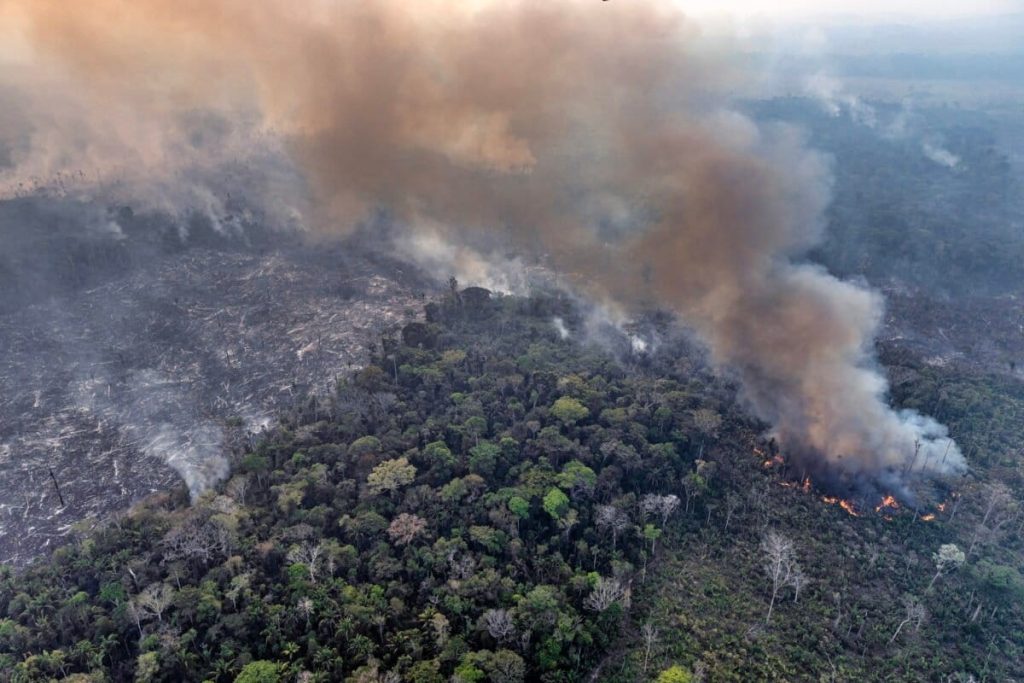
Amazon Fire Trends and Key Findings
● According to the MapBiomas environmental monitoring network, the Brazilian Amazon recorded only 3.1 million hectares of burned area in 2025, the lowest level since systematic records began in 1985.
● The sharp decline follows the devastating 2024 fire season, when prolonged drought, high temperatures, and widespread human-induced fires severely affected the world’s largest tropical rainforest.
● A delayed rainy season between 2024 and 2025 reduced the period suitable for agricultural burning, thereby limiting the spread of forest fires.
● Reduced deforestation also contributed to fewer fires by decreasing the amount of dry vegetation available as fuel.
● Improved community awareness after the extreme fires of 2024 encouraged quicker reporting and better control of fire outbreaks, helping interrupt the recent trend of expanding forest fires.
Environmental Significance and Challenges
● The Amazon Rainforest is one of the world’s largest carbon sinks, absorbing significant amounts of carbon dioxide (CO₂) and playing a vital role in regulating the global climate.
● Reduced forest fires contribute to biodiversity conservation, improved ecosystem resilience, and lower greenhouse gas emissions.
● Despite improvements in the Amazon, Brazil’s Cerrado Savanna continues to experience frequent fires due to agricultural expansion and changing climatic conditions.
● Experts have warned that the possible emergence of a Super El Niño could bring prolonged dry conditions, increasing the risk of future forest fires.
● Brazil has pledged to eliminate illegal deforestation by 2030, although concerns remain regarding proposed offshore oil exploration projects near the Amazon coast.
| Anout Amazon Rainforest & Global Climate : ● The Amazon Rainforest is the largest tropical rainforest in the world, covering approximately 5.5 million sq. km across nine South American countries, with nearly 60% located in Brazil. ● It is often referred to as the “Lungs of the Earth”, although its greater importance lies in functioning as a major carbon sink and regulator of the global water cycle. ● The Amazon is among the world’s richest biodiversity hotspots, supporting millions of species of plants, animals, insects, and microorganisms, many of which are endemic. ● Major threats include deforestation, forest fires, illegal mining, agricultural expansion, climate change, and infrastructure development. ● Conserving tropical forests supports global commitments under the Paris Agreement, the Convention on Biological Diversity (CBD), and Sustainable Development Goal (SDG) 13 (Climate Action) and SDG 15 (Life on Land). |