
E20 Ethanol Push: Balancing Energy Security and Sustainability
Why in the News ?
India’s E20 ethanol blending program has expanded rapidly, with the government highlighting foreign-exchange savings and reduced crude-oil imports. However, concerns over legacy vehicles, mileage losses, food security, water use and phased implementation have intensified the debate over the sustainability of ethanol blending.
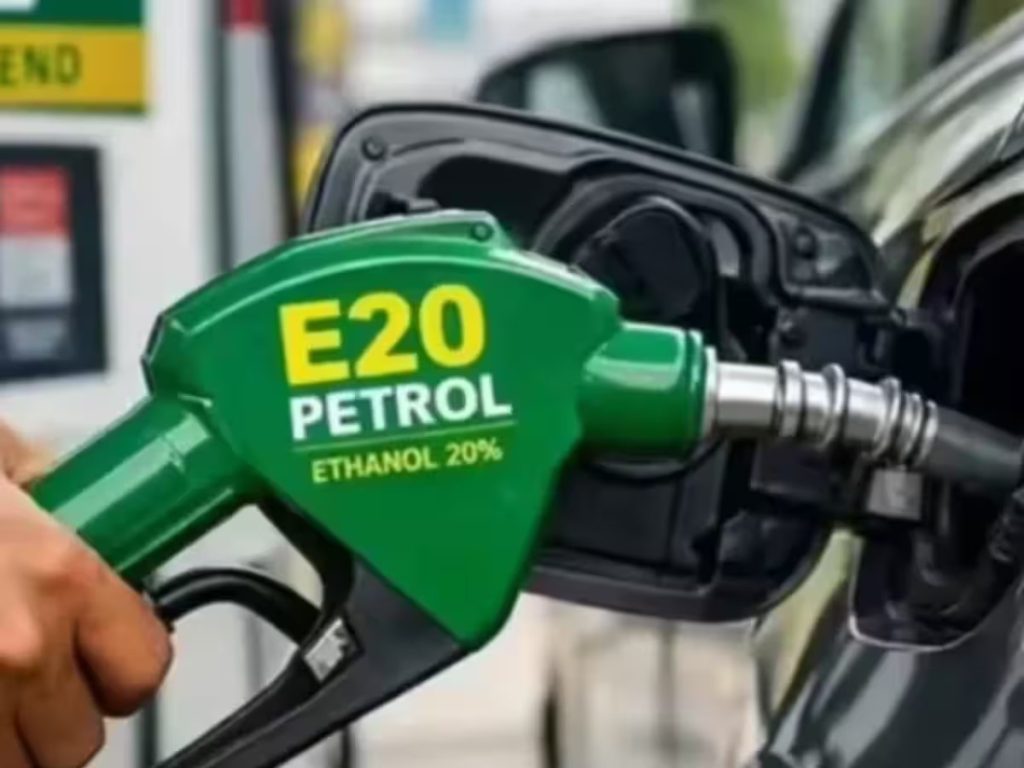
E20 Programme: Progress and Economic Rationale
● E20 refers to petrol blended with 20% ethanol, aimed at reducing India’s dependence on imported crude oil and improving energy security.
● India achieved the 10% ethanol-blending milestone in 2022 and subsequently accelerated the transition to E20.
● Ethanol production capacity has expanded substantially, reaching nearly 18–20 billion litres across about 500 distilleries.
● Oil marketing companies have contracted around 10 billion litres of ethanol for the current ethanol year.
● According to the government, ethanol blending has helped save approximately ₹2 lakh crore in foreign exchange and substitute around 32 million tonnes of crude-oil imports.
● Ethanol also creates a domestic market for sugarcane, maize and surplus food grains, potentially supporting farmers and rural industries.
● However, ethanol and petrol operate under different cost, taxation and pricing structures, making it difficult to independently establish how much E20 has contributed to lower retail petrol prices.
Vehicle Compatibility and Food-Security Concerns
● Vehicles manufactured after April 2023 were largely engineered for E20, using ethanol-resistant fuel lines, elastomers, pump seals and recalibrated engine-control systems.
● Around 23% of India’s active petrol fleet is estimated to consist of such E20-compatible vehicles.
● Older E5/E10 vehicles may face concerns because ethanol can absorb moisture and potentially degrade certain rubber, plastic and fuel-system components.
● Some studies indicate an efficiency or mileage penalty, particularly in vehicles designed for lower ethanol blends.
● A major concern is the diversion of sugarcane juice, B-heavy molasses, maize and FCI rice towards ethanol production.
● Although current sugar stocks remain adequate, poor harvests or food shortages could create tension between fuel security and food security.
About Ethanol Blending in India:
● Ethanol Blended Petrol Programme (EBP) seeks to reduce crude-oil imports, promote renewable fuel and provide an additional market for agricultural produce.
● Ethanol is a biofuel produced from feedstocks such as sugarcane, maize, molasses and surplus grains.
● Major benefits include energy diversification, lower import dependence, rural income generation and potential emission reduction.
● Challenges include water-intensive sugarcane cultivation, food-versus-fuel concerns, vehicle compatibility, storage issues and regional feedstock concentration.
● A sustainable transition requires phased implementation, transparent consumer communication, E20-compatible vehicles, diversified feedstocks and stronger assessment of the programme’s full environmental footprint.
● India can draw lessons from countries such as Brazil, where ethanol adoption developed alongside long-term vehicle and fuel-system adaptation.