
Earth Day Call For Sustainable Living And Conservation
Why in the News ?
On Earth Day 2026, Vice President C.P. Radhakrishnan urged citizens to adopt sustainable lifestyles and reaffirm commitment towards environment protection, highlighting India’s tradition of harmony with nature amid rising global concerns over climate change and the need for a pollution free environment.
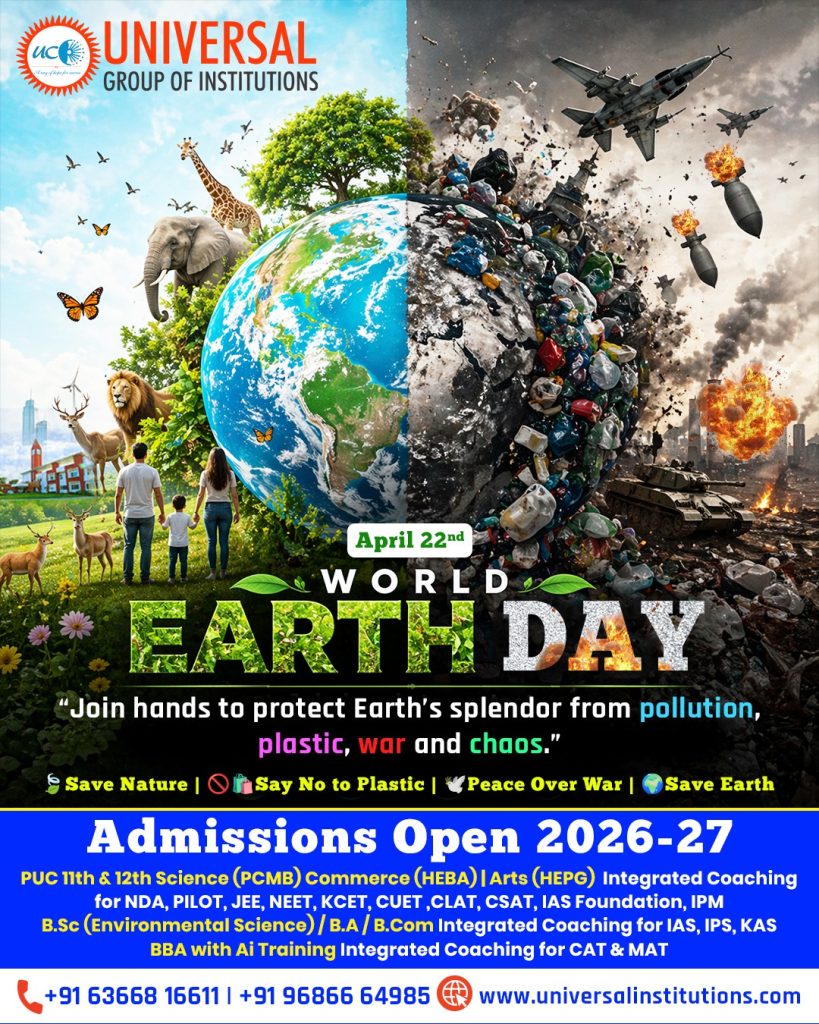
Earth Day Message and Key Highlights:
● Call for Action: Vice President C.P. Radhakrishnan emphasised the need to protect and preserve the planet.
● Cultural Ethos: Highlighted India’s civilisational values rooted in harmony with nature.
● Thiruvalluvar’s Wisdom: Referred to the idea of “diversified biodiversity”, stressing care for all living beings.
● Everyday Responsibility: Urged that environmental protection should not be limited to Earth Day alone, but practiced daily.
● Collective Effort: Stressed individual and community participation for a cleaner and greener future.
Need for Sustainable Living and Environmental Protection
● Climate Change Threat: Rising global warming, extreme weather events, and ecological imbalance demand urgent action.
● Sustainable Lifestyle: Encouraged practices like resource conservation, reduced waste, and eco-friendly habits.
● Biodiversity Conservation: Protection of flora and fauna is essential for ecological balance and human survival.
● Shared Responsibility: Governments, communities, and individuals must act together for environmental sustainability, guided by the polluter pays principle and precautionary principle.
● Small Steps Matter: Actions like plantation, water conservation, and energy efficiency can create significant impact.
| About Environment & Sustainability : ● Earth Day: Celebrated on April 22 globally to promote environmental awareness and action.● Sustainable Development: Development that meets present needs without compromising future generations (Brundtland Report). ● Key Concepts: Climate change, biodiversity, conservation, sustainable consumption, environmental jurisprudence, environmental democracy, polluter pays principle, and precautionary principle. ● Global Frameworks: Includes UN Sustainable Development Goals (SDGs), especially Goal 13 (Climate Action), and environmental impact assessment protocols. ● Indian Context: Policies like National Action Plan on Climate Change (NAPCC), Forest Conservation Act, EIA Notification, and mechanisms for environmental clearance support sustainability goals. The Vanashakti judgment strengthened environmental clearances by addressing issues of ex post facto or retrospective environmental clearances. |