
Europe’s Wildfires Intensify Amid Record Summer Heat
Why in the News ?
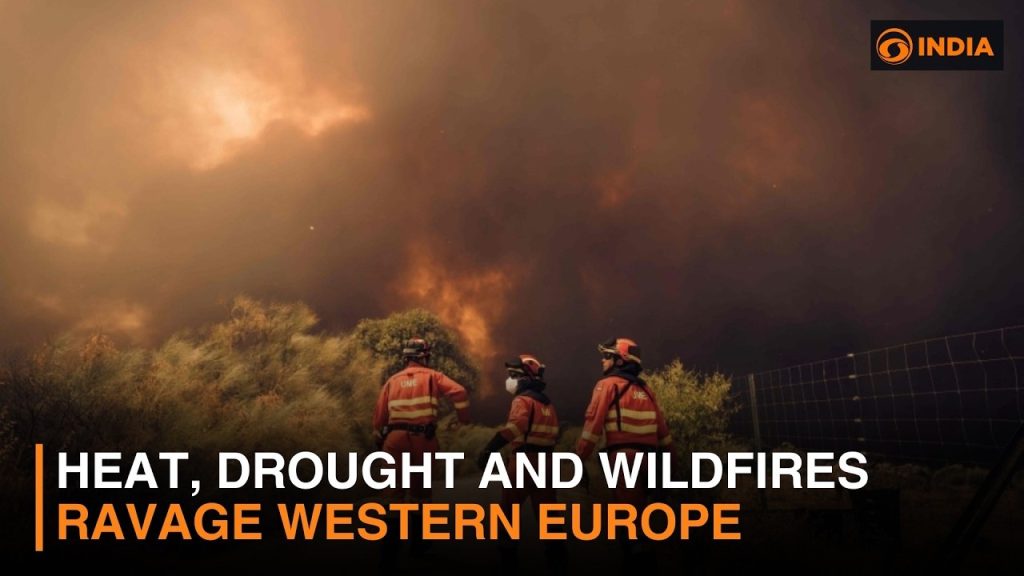
European countries are battling widespread wildfires amid one of the hottest and driest summers on record.Extreme heat, prolonged dryness and changing climate conditions are increasing fire risks, threatening lives, ecosystems and infrastructure across the continent.
Wildfires Across European Countries
● Belgium: A major wildfire continued to burn in the High Fens near the German border despite cooler weather and overnight rainfall.
● International firefighting: Dozens of firefighters, supported by aircraft from Norway, Sweden, Germany and the Netherlands, are working to contain the blaze.
● Greece: Authorities are investigating a wildfire on Salamina Island, which resulted in two deaths, nine injuries and destruction of several houses.
● Another wildfire erupted near Spata, east of Athens, in the vicinity of Greece’s international airport.
● France: A wildfire in the Landes region of southwestern France was brought under control after four days of firefighting.
● More than 600 evacuated residents in France have gradually been permitted to return as temperatures declined.
Climate Change and Wildfire Risk
● Recent scientific research has associated Europe’s extreme heat and dry conditions with climate change.
● Rising temperatures increase evaporation and soil moisture loss, creating dry vegetation that acts as fuel for wildfires.
● Prolonged heatwaves and droughts can make forest fires more frequent, intense and difficult to control.
● Wildfires cause significant ecological damage, including destruction of forests, biodiversity and wildlife habitats.
● They also generate carbon emissions, which can further contribute to global warming and create a feedback cycle.
● Extreme wildfire events increasingly pose risks to human settlements, agriculture, tourism, public health and critical infrastructure.
About Climate Change and Wildfires:
● Wildfires are uncontrolled fires occurring in forests, grasslands or other vegetated areas, often intensified by high temperatures, dry conditions and strong winds.
● Climate change increases wildfire risk by contributing to more frequent and prolonged heatwaves and droughts.
● Major impacts include:
○ Loss of biodiversity and forest cover
○ Carbon emissions and air pollution
○ Destruction of homes and infrastructure
○ Displacement of populations
○ Economic losses to agriculture and tourism
● Effective management requires early-warning systems, satellite-based monitoring, fire-resistant landscape planning, rapid firefighting capacity and climate-change mitigation.