
Hara Mangroves Face Severe Oil Spill Threat
Why in the News ?
Hara mangrove forests around Iran’s Qeshm Island face a serious ecological threat after a major oil spill spread along the southern coast. The pollution could damage mangrove ecosystems, marine biodiversity, fisheries and coastal livelihoods, while the ongoing regional conflict complicates cleanup operations.
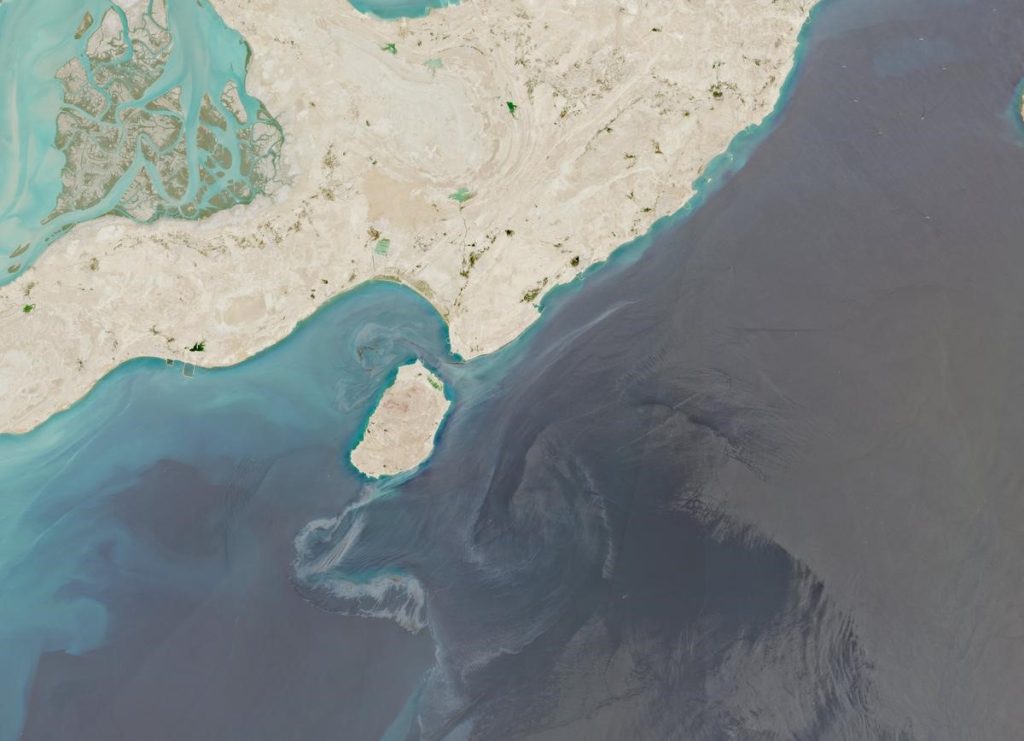
Hara Mangroves — Ecological Significance
● The Hara forests are an important mangrove ecosystem located around Qeshm Island and the Strait of Hormuz in the Persian Gulf.
● They mainly consist of grey mangroves (Avicennia marina), which possess specialised roots capable of filtering and tolerating highly saline water.
● Their extensive root systems stabilise coastlines and provide protection against coastal erosion, waves and storms.
● Mangroves are highly effective carbon sinks, storing substantial amounts of carbon and contributing to climate-change mitigation.
● The Hara forests are recognised as a UNESCO Biosphere Reserve, reflecting their ecological and conservation importance.
Oil Spill Threat and Wider Concerns
● Recent satellite imagery has detected a major oil slick off the southern coast of Qeshm Island, threatening the Hara forests.
● Experts have linked the spill to the bulk carrier Minoan Pioneer, which reportedly leaked heavy fuel oil after being struck by a projectile.
● The oil slick has reportedly extended for around 160 km, with polluted material already reaching the shoreline.
● Oil contamination can coat mangrove roots, reduce oxygen exchange, poison marine organisms and disrupt the entire coastal food chain.
● The ongoing West Asia conflict is hampering immediate containment and cleanup efforts, increasing the possibility of long-term ecological damage.
● Protecting Hara requires rapid oil-spill containment, shoreline cleanup, wildlife rescue, ecological monitoring and restoration, along with stronger regional mechanisms for protecting vulnerable coastal ecosystems.
Importance of Mangrove Ecosystems:
● Mangroves are salt-tolerant coastal forests found mainly in tropical and subtropical intertidal zones.
● They act as nursery grounds for marine organisms such as fish, shrimp and crabs, supporting fisheries and food security.
● The Hara ecosystem provides habitat for diverse migratory and resident birds, including herons and the great stone-curlew.
● Mangroves protect coastal communities by reducing the impact of waves, storm surges and erosion.
● They also support local livelihoods and sustainable tourism; Qeshm’s mangrove waterways attract visitors and contribute to the island’s economy.