
Hidden Fungal Networks Play Crucial Climate Protection Role
Why in the News ?
A recent study published in the journal Science has produced the first global map of Arbuscular Mycorrhizal (AM) fungi, revealing their enormous underground networks and highlighting their critical role in carbon sequestration, biodiversity conservation, and climate change mitigation. This comprehensive environmental impact assessment of fungal ecosystems underscores their importance in maintaining a pollution free environment.
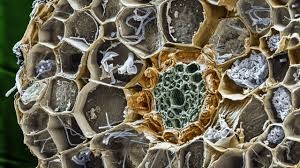
Global Mapping Reveals Vast Underground Fungal Networks
● Scientists used machine learning and data from over 16,000 soil cores to map the worldwide distribution of Arbuscular Mycorrhizal (AM) fungi.
● The study estimates that Earth’s topsoil contains approximately 110 quadrillion kilometres of fungal hyphae, forming one of the planet’s largest biological networks.
● These fungal structures store nearly 300 million tonnes of carbon, equivalent to four to six times the weight of the global human population.
● AM fungi have supported terrestrial plant life for millions of years, yet their scale and ecological significance remained largely undocumented.
● The research provides the first comprehensive assessment of this hidden underground ecosystem and its contribution to global ecological stability, emphasizing the need for environmental democracy in conservation decisions.
Role in Climate Regulation and Environmental Challenges
● AM fungi form symbiotic relationships with nearly 70% of plant species, exchanging soil nutrients for plant-derived carbon.
● Through this process, they help sequester nearly 4 billion tonnes of CO₂-equivalent annually, accounting for about 11% of human-induced carbon emissions.
● The study identified major fungal biodiversity hotspots in South Sudan, the Tibetan Plateau, and India’s Banni Grasslands, regions that require protection under the forest conservation act and related environmental clearances.
● Grasslands contain nearly 40% of the world’s AM fungal networks, making them ecologically significant carbon reservoirs.
● However, conversion of grasslands into agricultural land is reducing fungal density, with croplands showing nearly 50% lower fungal abundance than natural ecosystems. Applying the precautionary principle and polluter pays principle in land-use decisions could help protect these vital fungal networks.
| About Arbuscular Mycorrhizal Fungi : ● Arbuscular Mycorrhizal (AM) fungi are soil-dwelling fungi that establish mutually beneficial associations with plant roots. ● They enhance the absorption of phosphorus, nitrogen, water, and micronutrients, improving plant growth and resilience. ● In return, plants supply carbohydrates and carbon compounds produced through photosynthesis. ● AM fungi play a crucial role in soil fertility, nutrient cycling, carbon storage, and ecosystem productivity. ● Banni Grasslands, located in the Kutch district of Gujarat, represent one of Asia’s largest grassland ecosystems and are important for biodiversity conservation. |