
LADAKH NOTIFIES NAUTOR RULES TO SECURE LAND RIGHTS
WHY IN THE NEWS ?
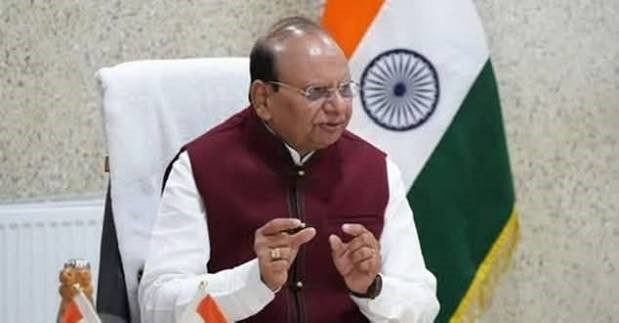
Ladakh Lieutenant Governor Kavinder Gupta has approved the Ladakh Autonomous Hill Development Councils (Nautor Regularisation) Rules, 2026.The rules establish a uniform mechanism to grant proprietary rights over eligible nautor land, addressing a long-standing issue involving landholders while protecting public and Council land.
NAUTOR LAND REGULARISATION AND PROPRIETARY RIGHTS
● Land Meaning: Nautor land refers to government-owned barren or wasteland historically allotted to individuals for cultivation or other productive purposes in Ladakh.
● Regularisation Mechanism: The rules introduce a one-time regularisation framework for eligible nautor land occupied before October 27, 2020, providing legal certainty to genuine occupants.
● Ownership Limit: Eligible occupants can receive proprietary rights for up to 10 acres of qualifying nautor land across all seven districts of Ladakh.
● Excess Land: Nautor land beyond the 10-acre ceiling may be provided on a leasehold basis, ensuring that regularisation does not result in unrestricted private ownership.
● Economic Security: Recognised landholders will receive stronger legal and financial security, allowing eligible land to potentially serve as an asset for obtaining bank loans and supporting productive activities.
SIGNIFICANCE FOR LAND RIGHTS AND LOCAL DEVELOPMENT
● Legal Certainty: Regularisation can provide documented ownership rights to genuine occupants who have historically cultivated barren land.
● Institutional Authority: Giving LAHDCs a defined role in allotment strengthens decentralised decision-making over land resources.
● Credit Access: Proprietary rights can improve access to formal institutional credit, as legally recognised land may provide greater financial security.
● Public Protection: Eligibility conditions and the acreage ceiling seek to prevent encroachment and unauthorised claims over public or Council land.
● Balanced Governance: The framework attempts to reconcile livelihood interests, property rights, local governance and protection of public land in a geographically fragile region.
About LAHDC AND LAND GOVERNANCE IN LADAKH:
● Legal Framework: The Ladakh Autonomous Hill Development Councils Act, 1997 provides the statutory basis for the functioning and powers of the Ladakh Autonomous Hill Development Councils (LAHDCs).
● Council Powers: Under Section 42, land within the district stands transferred to the Council, while Section 23 provides executive powers concerning the allotment, use and occupation of land vested in it.
● Decentralisation: LAHDCs represent a form of localised governance, enabling greater participation of local institutions in development and resource management.
● Territorial Status: Ladakh became a separate Union Territory in 2019 following the reorganisation of the former State of Jammu and Kashmir.
● Ecological Context: Ladakh’s cold desert ecosystem, fragile environment and limited cultivable land make responsible land-use planning particularly important for balancing livelihoods with ecological sustainability.