
Madan Lal Dhingra: Patriotism, Courage and Revolutionary Sacrifice
Why in the News ?
Lok Sabha Speaker Om Birla paid tribute to revolutionary freedom fighter Madan Lal Dhingra on his martyrdom day, recalling his patriotism, courage and sacrifice. Dhingra’s revolutionary activities in London and opposition to British rule remain significant in India’s freedom struggle.
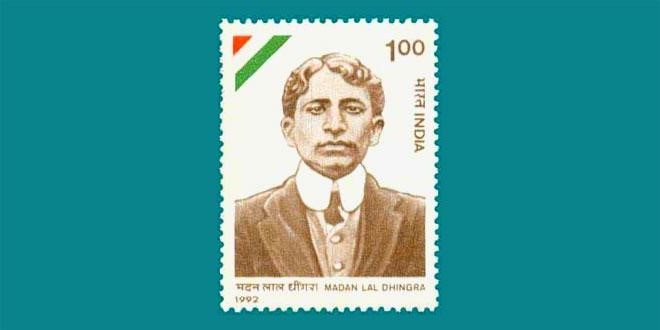
Madan Lal Dhingra: A Revolutionary Patriot:
● Madan Lal Dhingra (1883–1909) was an Indian revolutionary who actively opposed British colonial rule.
● He was born into a prosperous family in Amritsar but rejected a comfortable life to dedicate himself to India’s freedom.
● His commitment reflected the growing influence of revolutionary nationalism among Indian youth during the early 20th century.
● While studying in London, Dhingra became associated with Indian revolutionary circles opposing British imperialism.
● He openly raised his voice against India’s colonial subjugation and sought to challenge British authority.
● His life demonstrated selflessness, courage and unwavering commitment to the cause of national independence.
Revolutionary Activities and Martyrdom
● Dhingra became associated with India House, an important centre of Indian nationalist and revolutionary activities in London.
● Influenced by revolutionary ideas, he believed that direct resistance was necessary to challenge colonial domination.
● On 1 July 1909, Dhingra assassinated Sir William Hutt Curzon Wyllie, a British official, at the Imperial Institute in London.
● The incident attracted considerable attention because it occurred at the heart of the British Empire.
● Dhingra was arrested, tried and subsequently sentenced to death.
● He was executed on 17 August 1909 at Pentonville Prison, London, at the age of 25.
● His execution turned him into a symbol of revolutionary nationalism and sacrifice among sections of Indian youth.
Key points : Revolutionary Nationalism in India
● The revolutionary movement emerged as an important strand of the Indian freedom struggle alongside constitutional and mass-based political movements.
● Revolutionary nationalists sought to achieve independence through direct action, secret organisations and resistance against colonial officials.
● Important revolutionary centres developed in Bengal, Punjab, Maharashtra and abroad, particularly in London and later North America.
● Organisations and personalities associated with revolutionary nationalism included Anushilan Samiti, Jugantar, India House, Abhinav Bharat, Bhagat Singh and Chandrashekhar Azad.
● The movement contributed to the growth of political consciousness, nationalism and resistance to colonial rule.
● UPSC relevance: Dhingra is important for understanding revolutionary nationalism, overseas nationalist activities, India House and the ideological diversity of India’s freedom struggle.