
Nation Remembers Shaheed Udham Singh’s Enduring Revolutionary Legacy
Why in the News ?
The nation observed the 87th martyrdom day of Shaheed Udham Singh, paying tribute to his sacrifice in India’s freedom struggle. State-level commemorative events were organized in Punjab and Haryana, remembering his role in avenging the Jallianwala Bagh Massacre.
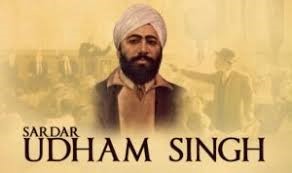
Shaheed Udham Singh: Revolutionary Legacy and Martyrdom:
● Shaheed Udham Singh was a prominent revolutionary freedom fighter associated with the Ghadar Party and the Hindustan Socialist Republican Association (HSRA).
● Deeply affected by the Jallianwala Bagh Massacre (1919), he dedicated his life to seeking justice against those responsible for the brutal colonial repression.
● On 13 March 1940, he assassinated Sir Michael O’Dwyer, the former Lieutenant Governor of Punjab, at Caxton Hall, London, holding him responsible for supporting the massacre.
● During his imprisonment, he adopted the symbolic name “Ram Mohammad Singh Azad”, representing Hinduism, Islam, Sikhism, and the ideal of national unity against British colonial rule.
● He was convicted by British authorities and executed on 31 July 1940, becoming one of the iconic martyrs of India’s independence movement.
Significance of His Sacrifice
● Udham Singh’s actions symbolized resistance against colonial oppression and reflected the determination of Indian revolutionaries to challenge British rule.
● His adoption of the name Ram Mohammad Singh Azad became a lasting symbol of communal harmony, secularism, and national integration.
● The Government and various states continue to honour his sacrifice through memorials, commemorative programmes, and educational initiatives.
● On his 87th martyrdom day, Punjab organized a state-level event at his birthplace Sunam, while Haryana also paid tribute through commemorative ceremonies.
● His life continues to inspire citizens with values of patriotism, courage, sacrifice, and national unity.
| About Shaheed Udham Singh and Revolutionary Movement: ● Birth: 26 December 1899, Sunam, Sangrur district (present-day Punjab). ● Organizations Associated: ○ Ghadar Party ○ Hindustan Socialist Republican Association (HSRA) ● Jallianwala Bagh Massacre (13 April 1919): ○ Took place in Amritsar, Punjab. ○ Ordered by Brigadier General Reginald Dyer. ○ Sir Michael O’Dwyer, then Lieutenant Governor of Punjab, endorsed the repressive colonial policies that led to the tragedy. ● Significance of “Ram Mohammad Singh Azad”: ○ Symbolized unity among India’s major religions.○ Reflected the ideals of secularism, anti-colonial nationalism, and inclusive patriotism. |