
SALMONELLA INFECTIONS: WHY INDIA NEEDS TO LOOK BEYOND TYPHOID AND DIARRHOEA
Why in the News?
Salmonella infections are receiving renewed attention because India faces a dual challenge of underdiagnosed non-typhoidal Salmonella infections and rising antimicrobial resistance. While typhoid remains a major concern, non-typhoidal strains can cause severe invasive infections, particularly among vulnerable populations. Weaknesses in food safety, sanitation, surveillance and antimicrobial stewardship make Salmonella an important One Health and public-health challenge.
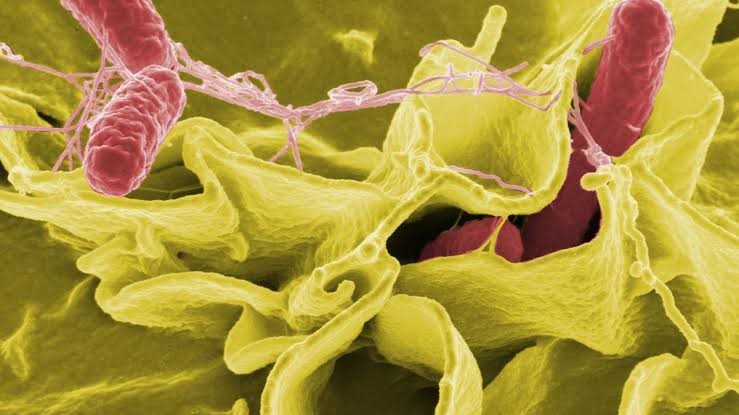
SALMONELLA: BEYOND TYPHOID AND FOOD POISONING
● Dual Spectrum: Salmonella causes both enteric fever through S. Typhi/Paratyphi and non-typhoidal salmonellosis, commonly associated with gastroenteritis.
● Hidden Burden: Non-typhoidal infections frequently remain undiagnosed because mild cases recover spontaneously without laboratory testing or medical consultation.
● Severe Outcomes: Although gastroenteritis is usually self-limiting, Salmonella can enter the bloodstream and cause invasive, potentially life-threatening infections.
● Vulnerable Groups: Young children, elderly persons and immunocompromised individuals face greater risks of severe disease and systemic complications.
● Different Ecology: Typhoid has humans as its primary reservoir, whereas non-typhoidal Salmonella involves animals, food chains and environmental reservoirs.
TRANSMISSION, FOOD SAFETY AND ONE HEALTH
● Food Sources: Poultry, eggs, meat and other animal-derived foods constitute important sources of non-typhoidal Salmonella transmission.
● Cross Contamination: Raw meat can contaminate ready-to-eat food during preparation, making kitchen hygiene and food separation critical preventive measures.
● Supply Chain: Contamination may occur across farms, slaughterhouses, processing facilities, transportation, storage, restaurants and household kitchens.
● Systemic Approach: Salmonella represents a One Health challenge, requiring coordinated interventions across human health, animal health, food systems and environmental management.
● Regulatory Gaps: Despite surveillance by FSSAI, weaknesses in sanitation, refrigeration, monitoring and enforcement remain particularly significant within India’s large informal food sector.
ANTIMICROBIAL RESISTANCE AND FOODBORNE DISEASE CONTROL
● Resistance Trend: Rising antimicrobial resistance in S. Typhi is reducing therapeutic options and increasing the difficulty of managing serious infections.
● Fluoroquinolone Resistance: Culture-confirmed isolates demonstrate historically high fluoroquinolone resistance, illustrating the consequences of prolonged antimicrobial selection pressure.
● Diagnostic Priority: Blood culture remains central for suspected typhoid and should ideally be performed before antibiotics are initiated.
● Prudent Treatment: Antibiotics should not be routinely used for uncomplicated non-typhoidal gastroenteritis, with fluid and electrolyte replacement forming the principal treatment.
● Preventive Strategy: Typhoid conjugate vaccination, safe water, sanitation, food safety and antimicrobial stewardship must operate together to reduce disease burden.