
SULPHURIC ACID MAY SUPPORT COMPLEX CHEMISTRY BEYOND EARTH
Why in the News ?
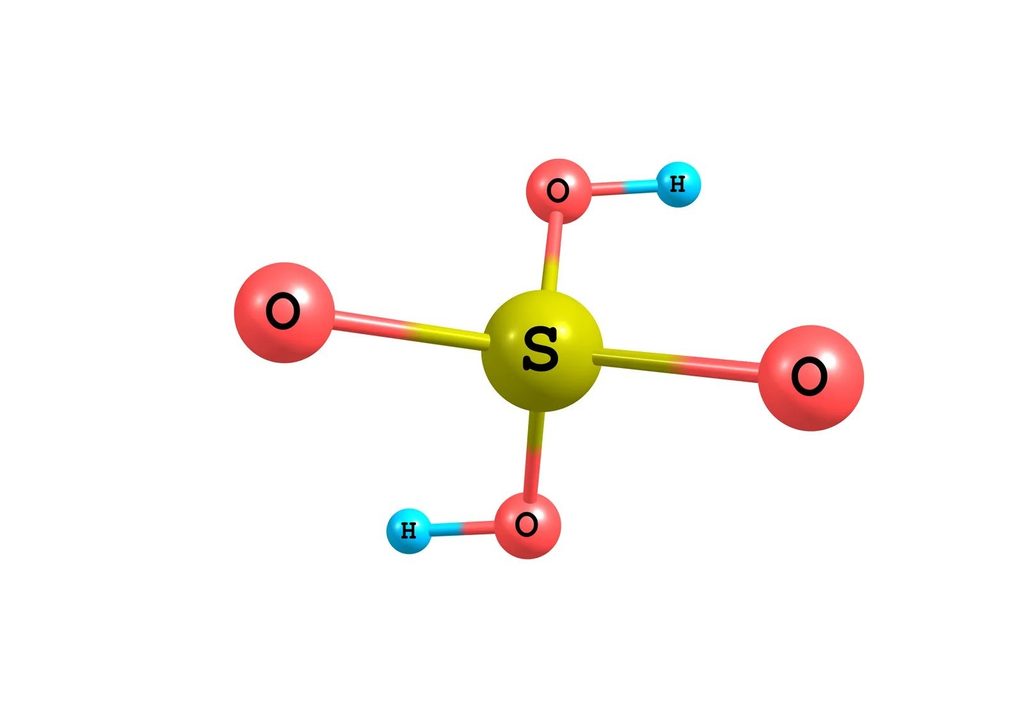
A study published in the Proceedings of the National Academy of Sciences has found that certain peptides can remain stable and retain complex three-dimensional structures even in 98% concentrated sulphuric acid. The finding challenges assumptions about extremely acidic environments and their potential for life.
Peptides Survive and Fold in Concentrated Acid
● Unexpected Stability: Researchers discovered that certain short peptide chains remain stable for several weeks at room temperature even in highly concentrated sulphuric acid.
● Reduced Hydrolysis: Strong acids normally break peptide bonds through hydrolysis, but 98% sulphuric acid contains very little water, limiting this water-dependent degradation process.
● Omega Loop: Using nuclear magnetic resonance (NMR) spectroscopy, researchers observed that the peptides formed a distinctive three-dimensional structure known as an omega loop.
● Acid Scaffolding: Unlike proteins in water, where structures such as alpha-helices and beta-sheets are common, sulphuric-acid molecules themselves appear to act as a scaffold supporting peptide folding.
● Biological Significance: Earlier research had shown that some amino acids and nucleic-acid bases can remain stable in concentrated sulphuric acid; this study extends the finding to a biologically important macromolecular structure.
Implications for Astrobiology and Search for Life
● Venus Analogy: Venus has clouds containing concentrated sulphuric acid, traditionally considered extremely hostile to complex chemistry and life.
● Habitability Debate: The ability of peptides to maintain structures in concentrated acid suggests that complex chemistry may persist under conditions previously considered inhospitable.
● Alternative Biochemistry: Life elsewhere may potentially use different solvents, molecular structures or chemical pathways from those dominant in terrestrial biology.
● Astrobiological Value: The findings broaden the range of environments scientists may consider when assessing planetary habitability and the possibility of life beyond Earth.
● Research Frontier: Further studies are needed to determine whether such acid-stable molecules can undergo self-assembly, catalysis or information storage, which are important characteristics of life.
About Acids, Peptides and Protein Structure:
● Sulphuric Acid: H₂SO₄ is a strong mineral acid widely used in fertiliser production, petroleum refining, chemical manufacturing and industrial processing.
● Strong Acid: Concentrated sulphuric acid has powerful dehydrating and corrosive properties, allowing it to remove water from organic materials and cause carbonisation.
● Peptides: Peptides are chains of amino acids connected by peptide bonds and form the structural basis of larger proteins.
● Protein Folding: Biological proteins acquire specific three-dimensional conformations that are essential for their biological functions.
● Hydrolysis: Hydrolysis involves breaking chemical bonds through reaction with water; peptide-bond hydrolysis normally contributes to protein and peptide degradation under suitable conditions.