
Supreme Court Allows Sedition Trials With Accused Consent
Why in the News ?
The Supreme Court of India clarified that trials, appeals, and proceedings related to the offence of sedition under Section 124A of the IPC may continue if the accused person has no objection to their continuation.
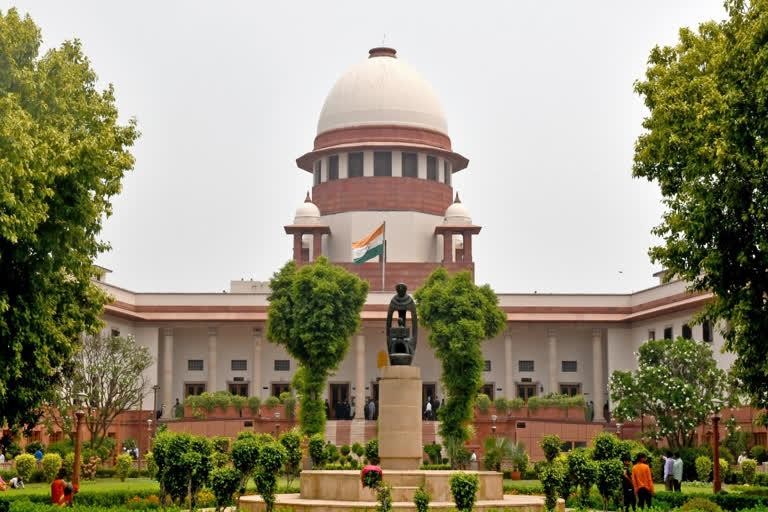
Supreme Court’s Clarification on Sedition Cases
● The Supreme Court stated that courts may proceed with sedition-related trials and appeals where the accused voluntarily agrees.
● The clarification was issued by a Bench headed by Chief Justice of India Surya Kant.
● The ruling came during the hearing of a plea filed by a person imprisoned for nearly 17 years in a case involving sedition charges.
● The Bench clarified that there would be “no impediment” to deciding such cases on merits if the accused does not oppose continuation of proceedings, rejecting any ex-post or ex post facto objections to trial continuation.
● The court also directed the Madhya Pradesh High Court to hear the petitioner’s pending appeal expeditiously.
Background of the Sedition Law Debate
● In May 2022, the Supreme Court had stayed ongoing sedition trials and investigations across the country pending the Union government’s review of Section 124A IPC.
● The court had then requested governments to avoid registering fresh FIRs or taking coercive action under the sedition provision, applying a precautionary principle approach similar to the polluter pays principle in environmental law to protect fundamental rights.
● The judiciary emphasised the need to balance national security interests with the protection of civil liberties and freedom of expression, similar to principles applied in environmental jurisprudence where courts balance development with rights protection, including the right to a pollution free environment.
● Meanwhile, challenges continue against Section 152 of the Bharatiya Nyaya Sanhita (BNS), which critics argue resembles the earlier sedition law.
● Petitioners claim that terms such as “subversive activities” and “endangering unity and integrity” remain vague and susceptible to misuse, arguing against any post facto justification of such provisions, similar to concerns raised against retrospective environmental clearances in the Vanashakti judgment.
| About Sedition Law and Constitutional Rights: ● Section 124A of the IPC defined sedition as actions or speech bringing hatred or contempt against the government established by law. ● The sedition law was introduced during British colonial rule to suppress political dissent and nationalist movements. ● Article 19(1)(a) of the Constitution guarantees the freedom of speech and expression, subject to reasonable restrictions under Article 19(2), forming part of environmental democracy and broader democratic participation rights. ● The Bharatiya Nyaya Sanhita (BNS) replaced the Indian Penal Code as part of India’s criminal law reforms. ● Courts in India have repeatedly examined the balance between protecting state sovereignty and safeguarding democratic freedoms and dissent, applying constitutional principles across various legal domains including environmental clearance procedures under the EIA Notification, Forest Conservation Act, and Coastal Regulation Zone regulations. ● Just as environmental impact assessment requires prior evaluation before project approval, legal proceedings require proper procedural safeguards, and courts have consistently rejected environmental clearances granted retrospectively without proper assessment. |