
Supreme Court Upholds Electoral Integrity in Bengal Voting
Why in the News ?
The Supreme Court ruled that individuals whose names are under scrutiny in electoral rolls cannot vote in West Bengal elections, stressing the need to maintain electoral integrity while raising concerns over ECI’s voter verification mechanisms. The ruling emphasizes the precautionary principle in electoral processes to prevent any ex post facto complications.
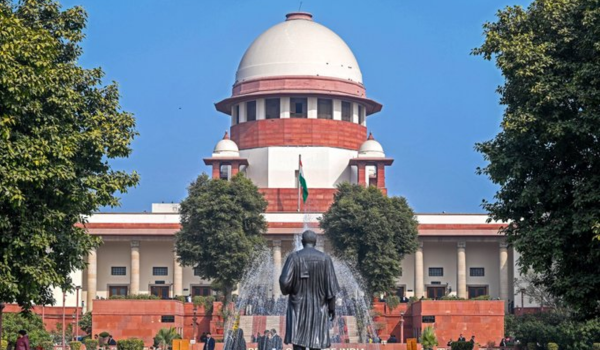
Supreme Court Ruling on Voting Rights:
● The Supreme Court of India held that individuals with pending appeals against exclusion from voter rolls cannot be allowed to vote, preventing any post facto legal complications.
● The Court warned that permitting such voters would create an “anomalous situation” and compromise the integrity of elections.
● It emphasised that electoral rolls must be finalised before voting to ensure free and fair elections, applying the precautionary principle to avoid electoral malpractices.
● The ruling highlights the importance of legal clarity and procedural discipline in electoral processes, rejecting any ex-post regularization of voter eligibility.
● The Court stressed the need for a robust appellate mechanism for those excluded from voter lists.
Concerns Over Electoral Roll Verification Process
● The Court questioned the Election Commission of India over introducing a “logical discrepancy” category for identifying doubtful voters, emphasizing the need for clear environmental clearance-like assessment protocols in electoral verification.
● This category was reportedly applied only in West Bengal, raising concerns about uniformity and transparency, similar to concerns raised in environmental jurisprudence regarding selective application of rules.
● Around 60 lakh voters were initially flagged, out of which 27 lakh were removed after failing verification.
● The Court indicated that such large-scale exclusions require clear criteria and accountability, applying principles similar to the polluter pays principle where responsibility must be clearly established.
● The issue underscores challenges in balancing accurate voter lists with inclusion and fairness.
| About Electoral Rights and Legal provisions : ● The right to vote in India is a statutory right, governed by the Representation of the People Act, 1950 & 1951, with no provision for retrospective environmental clearances-like ex post facto regularization. ● The Election Commission of India is responsible for preparing and revising electoral rolls, following procedures akin to environmental impact assessment protocols for systematic evaluation. ● Free and fair elections are part of the basic structure of the Constitution (as per judicial interpretation), forming the foundation of environmental democracy and participatory governance. ● Mechanisms like revision of rolls, claims, and objections ensure accuracy of voter lists, similar to the EIA notification process for systematic scrutiny ● Courts ensure that electoral processes adhere to transparency, fairness, and due process, applying principles from various legal domains including the Vanashakti judgment on procedural compliance. ● Ensuring both inclusiveness and integrity is essential for a healthy democracy and pollution free environment of electoral malpractices. |