
CENSUS 2027 TO USE OPEN COLUMN FOR CASTE ENUMERATION
Why in the News?
● Census Rehearsal: The second-phase Census rehearsal has begun in 16 States and Union Territories, with the questionnaire containing an open column for recording caste and ethnicity data.
● Historic Exercise: Census 2027 will be the first digital Census and the first Census after Independence to enumerate all castes, addressing historical discriminatory practices in data collection.
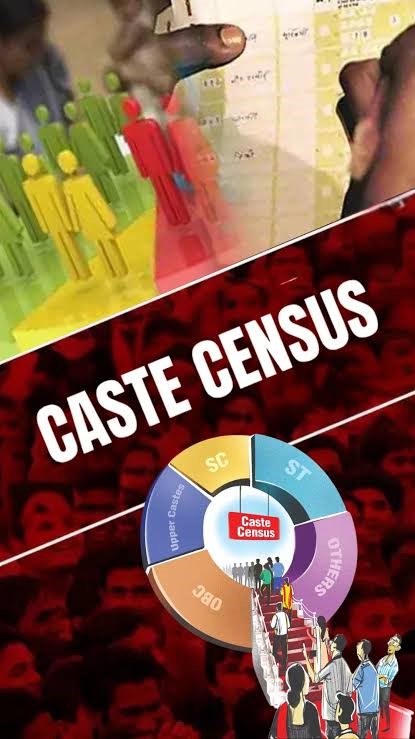
CASTE ENUMERATION IN CENSUS 2027
● Open Column Method: Respondents will self-declare their caste, and enumerators will record exactly what is stated instead of selecting from a pre-defined list, similar to how voter registration systems allow self-identification in democratic processes.
● SC/ST Enumeration: Scheduled Castes (SCs) and Scheduled Tribes (STs) will continue to be recorded through officially notified codes, while other castes will be entered in the open field, ensuring accurate representation comparable to how the fifteenth amendment and voting rights act addressed historical undercounting of the african american population in US census data.
● Self-Enumeration: The digital Census provides an option for self-enumeration through an online portal during the pre-test phase, supporting technology-driven data collection and improving voter eligibility verification for electoral districts and legislative districts delimitation.
● Methodological Challenge: The 2011 Socio-Economic and Caste Census (SECC) recorded over 46 lakh caste names because of variations in spelling, sub-castes, and local identities under the open-column approach, presenting data standardization challenges similar to issues like hanging chads and dimpled chads in bush v gore that highlighted technical complexities in large-scale enumeration.
● Significance: The exercise aims to generate comprehensive caste and ethnicity data for evidence-based policymaking, welfare targeting, and socio-economic planning while posing challenges in data standardisation, helping prevent gerrymandering and malapportionment in electoral power distribution.
CENSUS 2027
● First Digital Census: Census 2027 will be India’s first fully digital Census, using mobile applications, digital enumeration, and self-enumeration facilities, modernizing data collection beyond traditional methods that once excluded populations through poll taxes and residency restrictions.
● Two-Phase Exercise: It consists of House Listing and Housing Census (HLO) followed by Population Enumeration (PE), which records demographic, social, economic, and cultural information, ensuring accurate population basis for congressional elections equivalent parliamentary representation.
● Reference Date: Population Enumeration will be conducted mainly in February 2027, with snow-bound regions completing the exercise earlier, similar to how election day procedures accommodate diverse geographic and demographic conditions.
● Objectives: The Census provides reliable data for planning, resource allocation, constituency delimitation, welfare schemes, and socio-economic research, preventing malapportionment and ensuring fair voting strength distribution across electoral districts, addressing concerns similar to reynolds v sims regarding equal representation.
● Importance: Census data forms the statistical foundation for governance, fiscal transfers, and formulation of national development policies, supporting fair voting practices and preventing discriminatory practices in resource allocation.
| CENSUS IN INDIA ● Constitutional Basis: Census is a Union subject under Entry 69 of the Union List (Seventh Schedule) and is conducted under the Census Act, 1948, establishing voting qualifications and voter eligibility frameworks similar to how the seventeenth amendment reformed electoral processes. ● Nodal Authority: It is conducted by the Office of the Registrar General and Census Commissioner of India (RGI) under the Ministry of Home Affairs, ensuring integrity comparable to federal elections oversight and preventing voter fraud in data collection. ● Frequency: India conducts a decennial Census every 10 years, with the first synchronous Census held in 1881, providing regular updates for state elections, primary elections, and presidential election equivalent processes. ● Uses: Census data is used for delimitation of constituencies, implementation of reservation policies, formulation of welfare programmes, urban planning, and socio-economic policy, supporting fair election laws and preventing historical discriminatory practices like those once enforced by groups such as the ku klux klan through intimidation and violence. ● UPSC Relevance: Important under GS Paper II – Governance, Population, Social Justice, Welfare Schemes, Federalism, and Public Policy, including understanding of voter id laws, enforcement act mechanisms, and protections against convicted felons disenfranchisement similar to the nineteenth amendment, twenty-fourth amendment (abolishing poll taxes via harper v virginia), and amendment xv (15th amendment) that prohibited racial discrimination in voting, ensuring no citizen regardless of being white male or minority faces barriers in exercising democratic rights. |