
Hectocotylus Arm Helps Octopus Identify Mate Chemically
Why in the News ?
New research reveals that the hectocotylus arm in male octopuses acts as a sensory organ, detecting female hormones like progesterone. This discovery revises earlier understanding and highlights evolutionary adaptations in marine species for efficient reproduction and mate recognition.
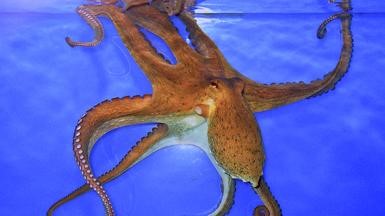
Key Findings on Hectocotylus Function:
● Male octopuses possess a specialised arm called the hectocotylus, earlier believed to only transfer sperm.
● New studies show it functions as a sensory organ, helping identify females.
● The arm can “taste” chemical signals by physically contacting the female.
● It detects progesterone hormone, present in the female’s skin and reproductive tract.
● Enables males to locate the oviduct for fertilisation, even in complete darkness, improving reproductive success.
Evolutionary and Biological Significance
● Discovery of a receptor called CRT1, which triggers mating behaviour in males.
● CRT1 evolved from ancient neurotransmitter receptors, showing adaptive evolution.
● The same receptor type is used for hunting prey, indicating dual functionality.
● This adaptation merges sensory detection and reproduction into a single appendage.
● Found across multiple cephalopods (octopuses and squids), suggesting a widespread evolutionary trait.
| About Cephalopods and Adaptation: ● Cephalopods include octopuses, squids, and cuttlefish—known for advanced nervous systems. ● Exhibit unique traits like camouflage, intelligence, and specialised appendages. ● Hectocotylus: modified arm in males used for reproduction. ● Demonstrates evolutionary adaptation, where small protein changes lead to complex behaviours. ● Highlights importance of marine biodiversity and evolutionary biology in understanding life processes. |